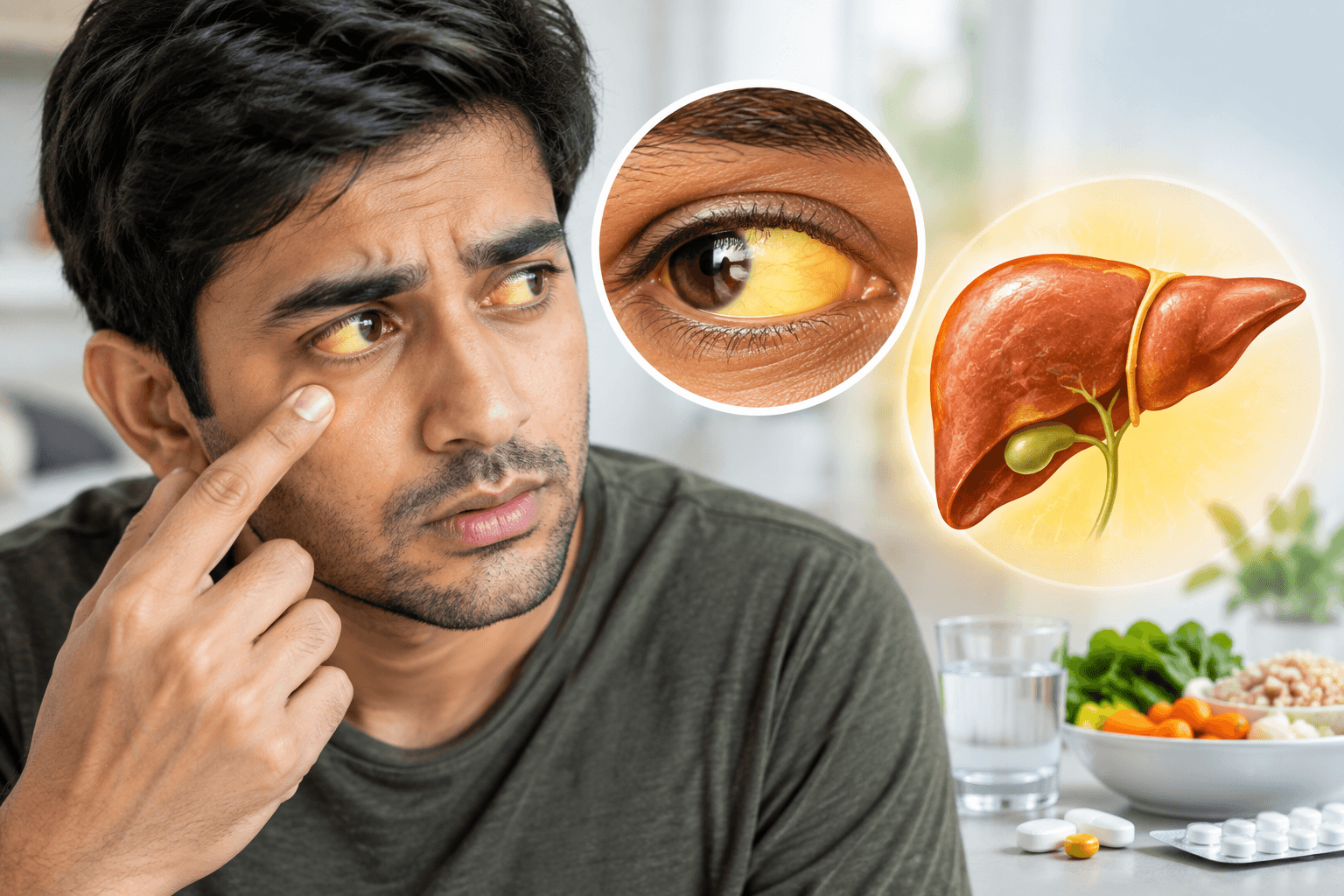
Jaundice is a condition in which your skin, whites of your eyes, and mucous membranes (such as the inside of your nose and mouth) become yellow. Many medical diseases, including hepatitis, gallstones, and tumors, can produce jaundice. When your primary medical condition is treated, jaundice normally goes away.
Overview
What is jaundice?
Jaundice (hyperbilirubinemia) occurs when your skin, sclera (the whites of your eyes), and mucous membranes become yellow. Jaundice develops when your liver is unable to filter bilirubin (a yellow material formed when red blood cells break down) in your blood. This can either be caused by excessive red blood cell breakdown or liver injury.
How Jaundice Develops:
Red blood cell breakdown: Your body regularly degrades old red blood cells and replaces them with fresh ones. This breakdown process produces bilirubin.
Bilirubin processing: Normally, your liver converts bilirubin into bile. Your liver then secretes the bile into your digestive tract.
Too much bilirubin: Jaundice occurs when your liver is unable to handle all of the bilirubin your body produces, or when your liver has difficulty releasing bilirubin.
Yellow color: When your blood contains too much bilirubin, it begins to leak into the tissues surrounding your blood vessels. The spilling bilirubin turns your skin and the whites of your eyes yellow. The yellow tint is a prominent indicator of jaundice.
Possible Causes:
What causes jaundice?
Jaundice can be caused by an issue with any of the three stages of bilirubin:
Prehepatic jaundice is the condition that occurs before the liver processes bilirubin. This type of jaundice occurs before the body produces bilirubin. Excessive red blood cell disintegration impairs your liver's capacity to filter bilirubin from your blood.
During bilirubin production (hepatic jaundice). This type occurs when your liver is unable to eliminate enough bilirubin from your bloodstream. Hepatic jaundice can occur if your liver fails.
After bilirubin generation (posthepatic jaundice). This form, also known as obstructive jaundice, occurs when bilirubin does not drain into your bile ducts due to a blockage.
The following conditions can produce jaundice:
Prehepatic jaundice causes
Breaking down a big hematoma (bruise) and reabsorbing it into the bloodstream.
Hemolytic anemias occur when blood cells are destroyed and eliminated from the bloodstream before they reach the end of their natural lifespan.
Hepatic jaundice causes
Virus infections include hepatitis A, chronic hepatitis B and C, and Epstein-Barr virus infection (infectious mononucleosis).
Alcohol-induced hepatitis.
Autoimmune diseases.
Rare hereditary metabolic abnormalities.
Toxicity from medications such as penicillin, oral contraceptives, chlorpromazine (Thorazine R), estrogenic or anabolic steroids, and acetaminophen.
Posthepatic jaundice causes
Gallstones.
Inflammation (swelling) of the gallbladder.
gallbladder cancer.
Pancreatic tumor.
How will you know if you have jaundice?
You might not see the yellow skin and sclera associated with jaundice. Your provider may discover the illness while searching for anything else. The severity of your symptoms is determined by their cause and the rate at which they develop.
Symptoms related with jaundice include:
Your skin and eyes have a yellowish color.
Fever.
Chills.
You're experiencing abdominal pain.
Flu-like symptoms.
Dark-colored pee.
Poop in a pale color.
Feeling exhausted or disoriented.
Itchy skin.
Weight loss.
Care & Treatment.
How can my provider know if I have jaundice?
Your provider can diagnose jaundice by detecting bilirubin levels in your blood and determining whether they are due to red blood cell disintegration (unconjugated) or liver injury (conjugated). They may also look for additional symptoms of liver disease, such as:
Bruising.
Spider angiomas are abnormal collections of blood vessels near the surface of the skin.
Palmar erythema (redness in the palms and fingertips).
Your healthcare provider will also examine your liver to determine its size and tenderness. To better understand what is causing your liver injury, they may utilize imaging (ultrasound and CT scanning) as well as liver biopsy (getting a tissue sample from your liver).
How is jaundice treated?
There is no specific treatment for jaundice. However, your provider can treat the underlying reason, and the jaundice should improve. They can also treat the complications that this illness brings. For example, if itching skin is a concern, your doctor may prescribe medicine.
What are the consequences of not treating jaundice?
It depends on what is causing your jaundice. If it's a virus, it may spread and become persistent. However, if your jaundice is caused by a failing liver, problems such as coma and death may occur.
Can you prevent jaundice?
There are numerous causes of jaundice, making it difficult to find measures to prevent it. Here are some general tips:
Getting vaccinated, having safe sex, using clean needles, and practicing excellent personal hygiene, such as complete hand-washing with soap and water, can all help prevent hepatitis infection.
Staying within the acceptable alcohol limit.
Maintaining a healthy weight.
Avoid natural and herbal supplements.
Managing your cholesterol.
When to Call the Doctor
When should jaundice be addressed by a doctor or healthcare professional?
A healthcare provider should assess jaundice. It indicates that something is not right with your liver. If you see signs of jaundice, contact your doctor.
Jaundice can be concerning, but it typically indicates an underlying health issue that requires care. Follow your doctor's recommendations, examine your medications, rest, eat well, remain hydrated, and avoid alcohol and other substances that can strain the liver. If your symptoms do not improve, contact your healthcare physician right away.