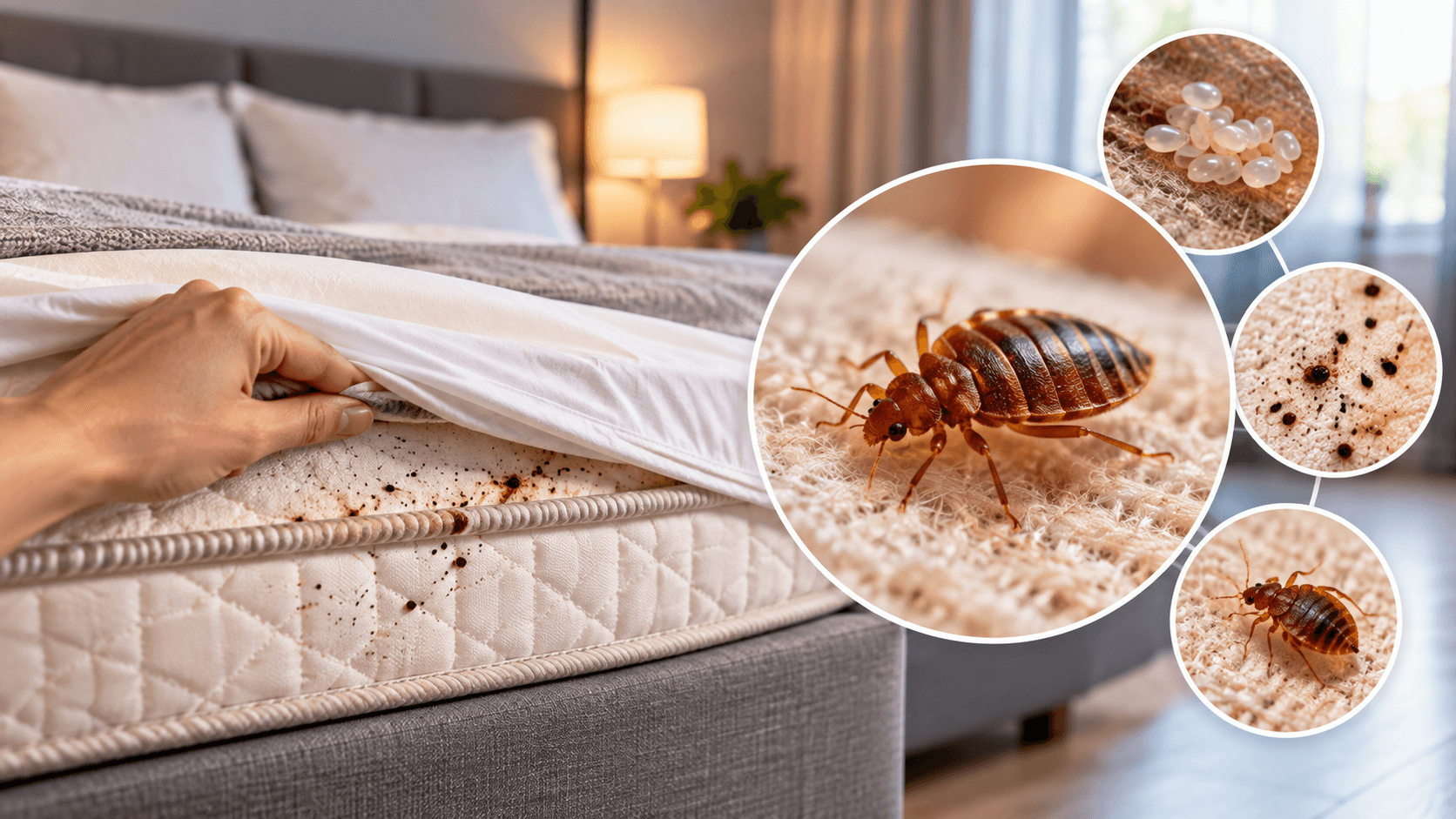
Bedbugs are tiny reddish-brown insects that feed on the blood of humans and animals. They do not have wings and are around the size of an apple seed. Their bodies are flat and oval shaped.
Young bedbugs, or nymphs, are tiny and seem translucent or pale yellow. If they haven't fed in a while, they can be difficult to see. Bedbug eggs are small and white, making them easily missed.
What do bedbugs look like?
Adult bedbugs are flat and approximately the size of an apple seed, measuring 5-7 millimeters in length. After feeding, they expand and turn crimson.
Their flat bodies allow them to slip into areas as small as a credit card.
Bedbugs do not form nests like ants or bees. They live together and hide in crevices, seams, and corners. They cannot fly, yet they travel quickly across floors, walls, and ceilings.
Female bedbugs lay hundreds of tiny eggs, each no larger than a dust speck. Young bedbugs, known as nymphs, shed their skin five times before becoming adults, each time requiring a blood meal. In ideal conditions, they mature in approximately a month and can produce multiple generations per year. Bedbugs often live for ten months to a year.
What Causes Bed Bugs?
Bedbugs typically enter your home from other areas that are already afflicted with them. If you reside in an apartment or condominium, they may travel from another property in your building. They may catch a ride on secondhand upholstered furniture. Alternatively, you may transport them in luggage or a pocketbook and leave them in a bedbug-infested area.
They're tiny and skilled at concealing throughout the day, so they can easily sneak into your home without your knowledge.
Bedbugs can reside in several places, including:
Apartments
Shelters Hotels
Rooming houses
Dorm rooms
Cruise ships
Busses Trains
How Can Bedbugs Affect My Health?
Bedbugs are not considered hazardous. "The most prevalent problem is the development of an itchy, red rash that typically occurs in a line or cluster. According to María Escarcia, DO, an emergency medicine specialist at Baptist Health South Florida, excessive scratching can cause skin infections like impetigo or cellulitis.Bedbug bites can also cause allergic reactions," Escarcia explains. "These may include hives, asthma, or even anaphylaxis – an allergic reaction characterized by swelling, difficulty breathing, and a fast drop in blood pressure.
Bedbug infections have been connected to iron deficiency anemia and psychological discomfort, according to Escarcia. Consult your doctor if you have any of these symptoms.
There is no proof that bedbugs transmit disease to people.
What are the early signs of bedbugs?
You might not see bedbugs immediately away. Some people may not react to bites, but others develop little red markings later. Often, the first clues are the marks they leave.
Search for:
Small blood spots on your mattress or linens
Small black specks (bedbug droppings)
Pale yellow eggs or eggshells.
Shed skins that resemble the bugs themselves.
A pleasant, musty aroma around your bed
Real bedbugs on your mattress, box spring, or headboard
How to Check for Bed Bugs
If you suspect you have bedbugs in your house, thoroughly inspect your mattress and bed, particularly in the crevices. Bedbugs prefer to hide in areas where they may easily bite people. They may be found near your mattress or box springs' seams, tags, and piping, as well as in cracks in your bed frame or headboard.
However, with time, the small bugs may spread out into any crack or spot that provides a hiding place. You can find them:
In the seams or between the cushions of couches and chairs
Within the folds of curtains
In drawer joints
In electrical outlets and appliances
In rooms or apartments nearby.
On clothes.
Under the flaking paint or loose wallpaper
In box springs.
In bedding.
Under carpeting near the baseboards
On luggage.
In boxes.
On mattresses.
On objects near the bed.
Bedbugs on headboards do not indicate dirtiness as they feed solely on blood. They can be found in both immaculate and messy homes.
What are Bedbug Bites?
Bedbugs are more active at nite and typically bite you as you sleep. They penetrate your flesh and draw blood with their long beaks. The bugs feed for 3-10 minutes until they're full before crawling away.
A bedbug bite may cause an itchy area on your skin. Bites on people with light skin frequently appear red. On darker skin, they may appear purple. They can be tougher to see on darker skin. Bedbug bites may appear differently on everyone, as some people may have no reaction while others may be allergic and experience severe symptoms.
Bedbugs typically leave bites in a straight row or zigzag pattern, but they can also be randomly distributed. Bite marks can take up to two weeks to form, so you may not notice them straight away.
Unlike flea bites, which are mostly found on your ankles, bedbug bites appear on areas of skin that are exposed while you sleep, such as your face, neck, or hands. Furthermore, unlike flea bites, bedbug bites lack a red mark in the center.
You may believe that the itching and welts are caused by other factors, such as mosquitoes. To confirm a bedbug infestation, locate and identify the bugs.
Bedbug bites can cause insomnia, anxiety, and skin irritation owing to itching.
Bedbug allergy.
If you are allergic to bedbugs, the most noticeable change will be how irritating the bites are. If your bites are unbearable, you are most certainly experiencing an allergic response and should consult a doctor. Your doctor will manage your reaction.
Bed bug rash
Many forms of skin problems resemble bedbug bites. Hives, a fungal illness, or a heat rash can all result in red pimples that are readily mistaken for bedbugs. If you're unsure, look for evidence of bedbugs to establish you've been bitten, or consult your doctor.
How Do You Get Rid of Bed Bugs?
To get rid of bedbugs, you can start by doing these steps at home:
Wash your bedding, curtains, and clothing in hot water and dry on the highest dryer setting. Put stuffed animals, shoes, and other non-washable things in the dryer and set it on high for 30 minutes or more.
To remove bedbugs and their eggs from mattress seams, scrape them with a firm brush before vacuuming.
Vacuum your bed and surrounding area every day, including the windows and molding. After that, place the vacuum cleaner bag in a plastic bag and dispose of it outside immediately away.
To prevent bedbugs from entering or leaving, place a closely woven, zipped cover over your mattress and box springs. Bedbugs can survive for several months without food. So, leave the cover on your mattress for at least a year.
Repair plaster cracks and glue down peeling wallpaper to eliminate any potential hiding places for bedbugs.
Remove any debris surrounding your bed and move it away from the walls and other furniture.
If you reside in a hot climate, store your belongings in an enclosed bag and put them in your car to bake in the sun. The target temperature is at least 120 degrees Fahrenheit.
If your mattress is contaminated, you may wish to replace it. But first, take the above procedures throughout your home to keep bedbugs out of your new mattress.
Bed bug spray
Chemical treatments are frequently used to totally eliminate bedbugs. Make sure you only use insecticides approved by the Environmental Protection Agency and labeled to control bedbugs. Do not treat mattresses or bedding unless the label clearly states that they can be used on bedding. Never use them on your body.
It is usually better to employ a professional exterminator who is familiar with bedbugs.
How Can You Prevent Bedbugs?
Some strategies to prevent bedbugs (and bedbug bites) include:
Place a protective cover over your mattress and box springs. Check for holes on a regular basis.
Remove clutter from your bedroom so that bedbugs have fewer locations to hide.
Vacuum routinely, including your mattress, carpet, drapes, and upholstered furnishings.
When you're away from home, keep your bag on a suitcase stand, dresser, or table rather on the bed or floor. When you get home, wash and dry all of your travel clothes in a hot dryer.
Wear long-sleeved pajamas and leggings to protect your skin from bites.
Before bringing secondhand upholstered furniture into your home, thoroughly inspect it.
Avoid used mattresses and bedding.
When utilizing shared laundry facilities, place your clothes and linens in plastic bags. Bring clean clothes home and fold them if possible.
If you reside in a multi-unit structure, place barriers under your doors and cover baseboard cracks.
What are some bedbug myths?
Myth 1: A foam mattress keeps you safe from bedbugs.
Bedbugs cannot dwell within foam, but they can hide in cracks and crevices, such as the bed frame or headboard. Mattress coverings are useful, but they do not prevent bedbugs from residing elsewhere in your room.
Myth #2: Bedbugs only travel on cloth.
Bedbugs can move on their own. They slither into outlets, hallways, and doors. They don't require clothing or bags to spread; they simply use them for a smooth journey.
Myth 3: You must throw away everything you own.
That is not true. Pest control professionals can use intense heat to eliminate bedbugs in your house. Once treated, your things are safe to retain and reuse.
Myth 4: Once you get rid of them, they're gone forever.
Bedbugs can live for months without food. It is critical to contact a professional exterminator very away and follow up to ensure that all of the bugs have been eliminated.
When to See a Doctor?
If you experience any symptoms other than itching, such as hives or blisters, or if you suspect you are experiencing an allergic response, contact your doctor.
Takeaways
Bedbugs can dwell practically anyplace and travel around easily. To safeguard your home, learn how to recognize early warning signs and stay vigilant if you suspect an infestation. To safely address the issue, contact a pest control professional. If you get an allergic response or serious skin irritation from bites, call your doctor right once.