Uses
What exactly is glutathione used for?
Glutathione is often utilized to improve overall health and immune system function, although its benefits are not well understood.
The FDA has not evaluated glutathione's safety and effectiveness.
How does glutathione function (mechanism of action).
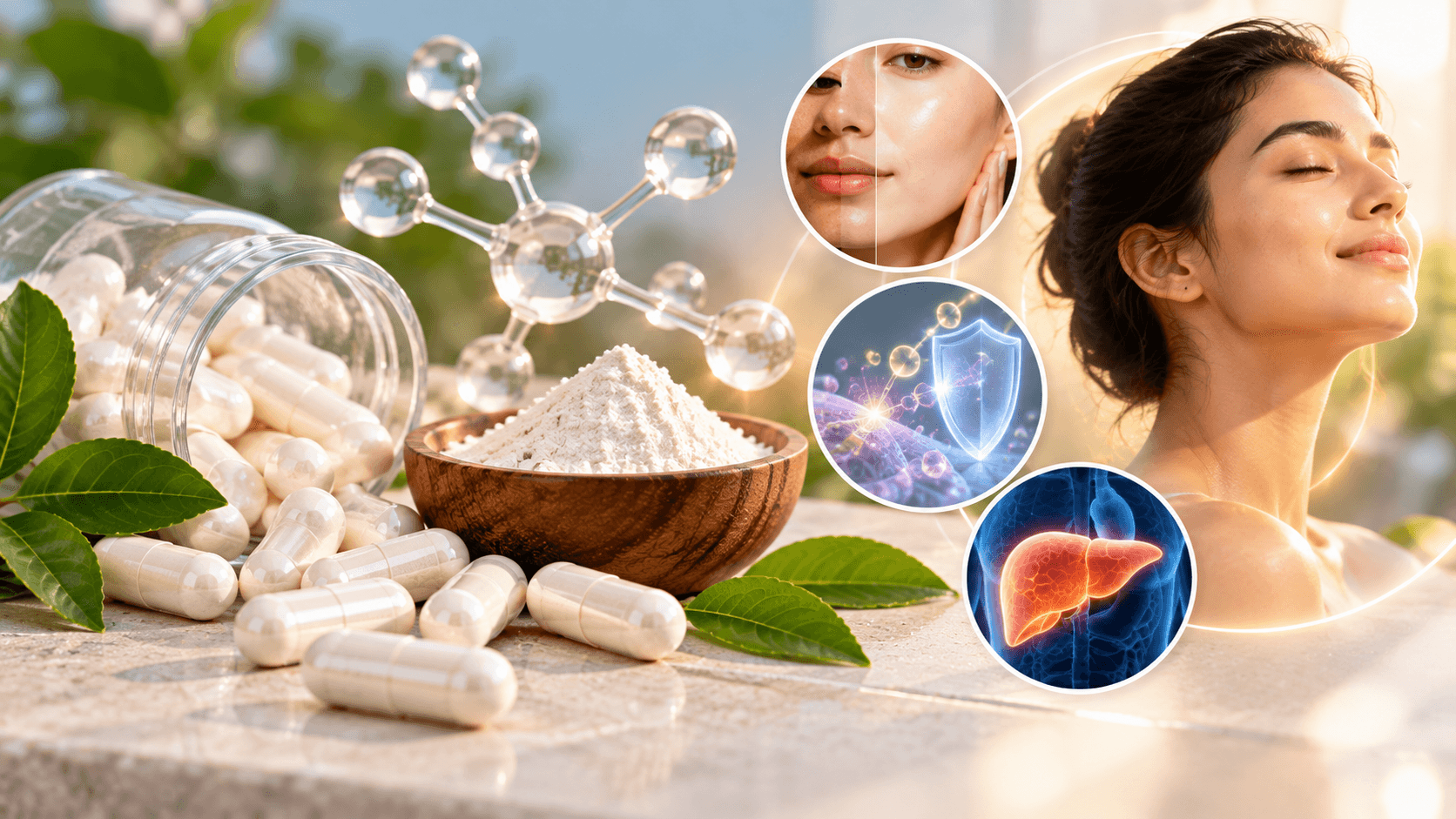
Glutathione is produced by your liver from three amino acids: cysteine, glutamate, and glycine. Your body produces glutathione on its own, but it is also found in trace amounts in some foods, including spinach, avocados, and asparagus. Glutathione has numerous vital activities in the body, but it is best known for its role as a powerful antioxidant. It helps to protect cells throughout your body, including your liver, lungs, and red blood cells. It is also known as GSH and L-glutathione, which are the same chemical.
Your body produces less glutathione as you age. Glutathione levels may also decrease in those who consume excessive amounts of alcohol or smoke cigarets. People with cystic fibrosis, diabetes, cancer, and hepatitis have reduced glutathione levels. However, it is unclear whether consuming glutathione is beneficial for any of these disorders.
There is interest in taking glutathione to assist your body battle inflammation, toxins, and other potentially harmful things. It is sometimes used to improve overall health and immunological function. However, its advantages for any application are not fully defined.
Some skin care products include glutathione. Many of these products claim that glutathione helps brighten the skin and remove toxins. However, its benefits for any skin application have been inadequately investigated and remain unknown.
How do I store glutathione?
You should store glutathione in accordance with the product label. Most dietary supplements should be stored in a cool, dry place out of the reach of children and pets, and out of direct sunlight.
Side Effects
What are the most prevalent side effects of glutathione?
Glutathione appears to be well tolerated. If you have any bothersome side effects, notify your healthcare provider.
There may be additional glutathione side effects that have not been listed. If you believe you are experiencing an adverse effect from a supplement, contact your healthcare provider.
What are the significant negative effects of glutathione?
While less prevalent, the most serious glutathione adverse effects are listed here, along with what to do if they occur.
Severe allergic reactions. Glutathione may trigger allergy reactions that are significant. If you experience any of the following signs of a serious adverse reaction, discontinue use of glutathione and seek medical attention immediately.
breathing issues or wheezing.
A racing heart
Fever or general sick feeling.
Swollen lymph nodes.
Swelling of the lips, mouth, tongue, or throat.
Difficulty swallowing or throat tightness
itching or skin rash
Hives are bumps on the skin that can be red, pink, white, or brown depending on your skin tone.
Nausea or vomiting.
Dizziness, lightheadedness, or fainting
Stomach cramps.
Joint discomfort.
Warnings and Precautions
Who shouldn't use glutathione?
Allergies to ingredients. People with allergies to any of the following should avoid using glutathione.
Gamma-L-glutamyl-L-cysteinylglycine
Glutathione
GSH (L-glutathione)
Any of the ingredients in the particular product
Your pharmacist can tell you about all of the ingredients in the glutathione products they stock.
What do I need to know about glutathione before using it?
Glutathione is a nutritional supplement. It cannot be advertised to treat or cure any condition.
Read and follow the instructions for the product you're using, or use it as directed by your health care professional.
Keep glutathione out of reach of youngsters.
Don't confuse glutathione with N-acetylcysteine. Some people take N-acetylcysteine to boost glutathione levels. However, these molecules are not the same, and consuming N-acetylcysteine may not always raise your glutathione levels.
The FDA has not evaluated glutathione products to ensure that they contain the chemicals listed on the label. Some dietary supplements have been evaluated by third-party organizations to ensure that they contain the ingredients specified on the label and are free of dangerous substances.
What should I notify my doctor before using glutathione?
Inform your healthcare provider about any of your medical issues, as well as any prescription or over-the-counter (OTC) medications, vitamins/minerals, herbal products, and other supplements you are taking. This will help them determine whether glutathione is good for you.
Make careful to bring up any of the following.
Pregnancy. It is unclear whether glutathione could disrupt pregnancy or harm a fetus. Inform your healthcare professional if you are pregnant or intend to become pregnant.
Breastfeeding. Glutathione gets into breast milk. Inform your healthcare practitioner if you are nursing or want to breastfeed.