What is IPL Treatment?
Intense pulsed light (IPL) therapy, commonly known as photo facials, is a non-surgical method for improving the color and texture of your skin. It can reverse some of the visual damage caused by sunlight, a process known as photoaging. You may notice it primarily on your face, neck, hands, or chest.
IPL may be beneficial if you have red, brown, or splotchy skin due to a medical issue.
IPL vs Laser
IPL and laser treatments can be used to treat a wide range of skin conditions. The key distinction is that IPL therapy is gentler on the skin and typically requires more sessions than laser therapy to get equivalent outcomes. Laser treatment is more severe, and recovery takes longer. It can produce more obvious outcomes with fewer operations. Unlike lasers, an IPL device emits multiple wavelengths of pulsing light. IPL can treat multiple skin issues at the same time. IPL or laser may be more effective for certain skin conditions. Your dermatologist can advise you on which is best suited to your needs.
How Does IPL Treatment Work?
IPL employs light radiation to target specific colors in your skin.
When your skin is heated, your body eliminates undesirable cells, thereby resolving the ailment you are being treated for. It can treat a variety of skin diseases simultaneously.
Your skin tone may appear more even after IPL, making you look younger. And because the light does not damage other tissues, you can recover rapidly.
You should seek therapy from a board-certified dermatologist (whose name may include the letters FAAD, or Fellow of the American Academy of Dermatology). In rare situations, a nurse or physician assistant may be able to accomplish it. In either case, look for someone who specializes in IPL therapy.
What Does IPL Treat?
It works best with pale or light brown skin. Consult your dermatologist if you want to reduce or eliminate
Acne
Birthmarks
Stretch markings
Liver or aging spots.
Broken blood vessels.
Brown spots are often known as liver or aging spots.
Dark patches caused by hormonal fluctuations.
Discolored skin
Fine creases.
Freckles
Rosacea-related skin redness
Scars
Spider veins
Unwanted Hair
Who Should Not Get IPL Treatment?
Consult your doctor first if you:
Are pregnant.
Have a skin condition.
Have a sunburn.
Take medication for other illnesses such as blood thinners or the acne treatment isotretinoin, sometimes known as Accutane.
The IPL is not a good idea if:
Are sensitive to light.
Have you recently tanned your skin with sunlight, tanning beds, or tanning creams?
You could have skin cancer.
Use retinoid cream.
They have incredibly dark skin.
Have a skin resurfacing problem.
Have significant scars.
Have keloid scar tissue.
On the day of your consultation, avoid wearing perfume, cosmetics, or scented anything that may irritate your skin.
Does IPL cause cancer?
Research indicates that IPL is safe and does not cause cancer. IPL has been used for over 30 years with no reports of increased risk of skin or other types of cancer.
Does IPL work?
The effectiveness of IPL varies depending on the problem you seek to cure. You may want to address the following concerns:
Redness. Most people can have 50%-75% of their broken blood vessels repaired with light therapy after one to three treatments. They could completely vanish. While treated veins do not return, new ones may appear later.
Sun harm. You may see a 70% reduction in brown patches and redness produced by UV radiation.
Hair removal. You'll reap the biggest benefits if you have light skin and dark hair. It might not work at all if you have dark complexion or blond hair.
Dry eyes. Dry eyes are usually treated first with over-the-counter or prescription eye drops, followed by lifestyle adjustments. However, if other treatments are ineffective, IPL may be helpful. Your symptoms are likely to lessen by 25%-50% or more.
Acne. If you suffer from acne or the scarring that comes with it, IPL may be beneficial. Although research is ongoing, it is anticipated that IPL will result in a considerable reduction in acne symptoms, with over 90% of participants reporting positive outcomes. You may need several sessions to see a difference.
Rosacea. If rosacea causes your face to flush, IPL is a viable option to laser therapy. You might get better results if:
You're under forty.
Your condition is moderate to severe.
Side Effects of IPL Treatment
IPL treatment is safe when performed by a professional technician. However, it may cause hormonal brown patches to flare up. You may get other undesirable side effects.
Your skin can:
Scars can be painful.
Swell
Bleed
Get infected
Change color.
Get crusty.
Blister
Consult your dermatologist if you feel sick after your treatment or if your symptoms worsen.
Side Effects of IPL Hair Removal
IPL hair removal may result in short-term negative effects. This includes:
Skin Sensitivity
Mild discomfort or pain, such as stinging or the sensation of having a sunburn.
Skin discoloration, such as mild redness.
Skin infections occur less frequently. In rare situations, skin may blister or scar, especially in those with sensitive skin.
IPL Procedure
Prior to the surgery, avoid:
Tan in the sun, in a tanning bed, or using tanning creams for four weeks before treatment.
Wax, undergo a chemical peel, or collagen shots two weeks before
Wear perfume, cosmetics, deodorant, or other skin irritants.
Take aspirin or another medicine that causes you to bleed more.
Take any prescription that will make you sun-sensitive, such as the antibiotic doxycycline.
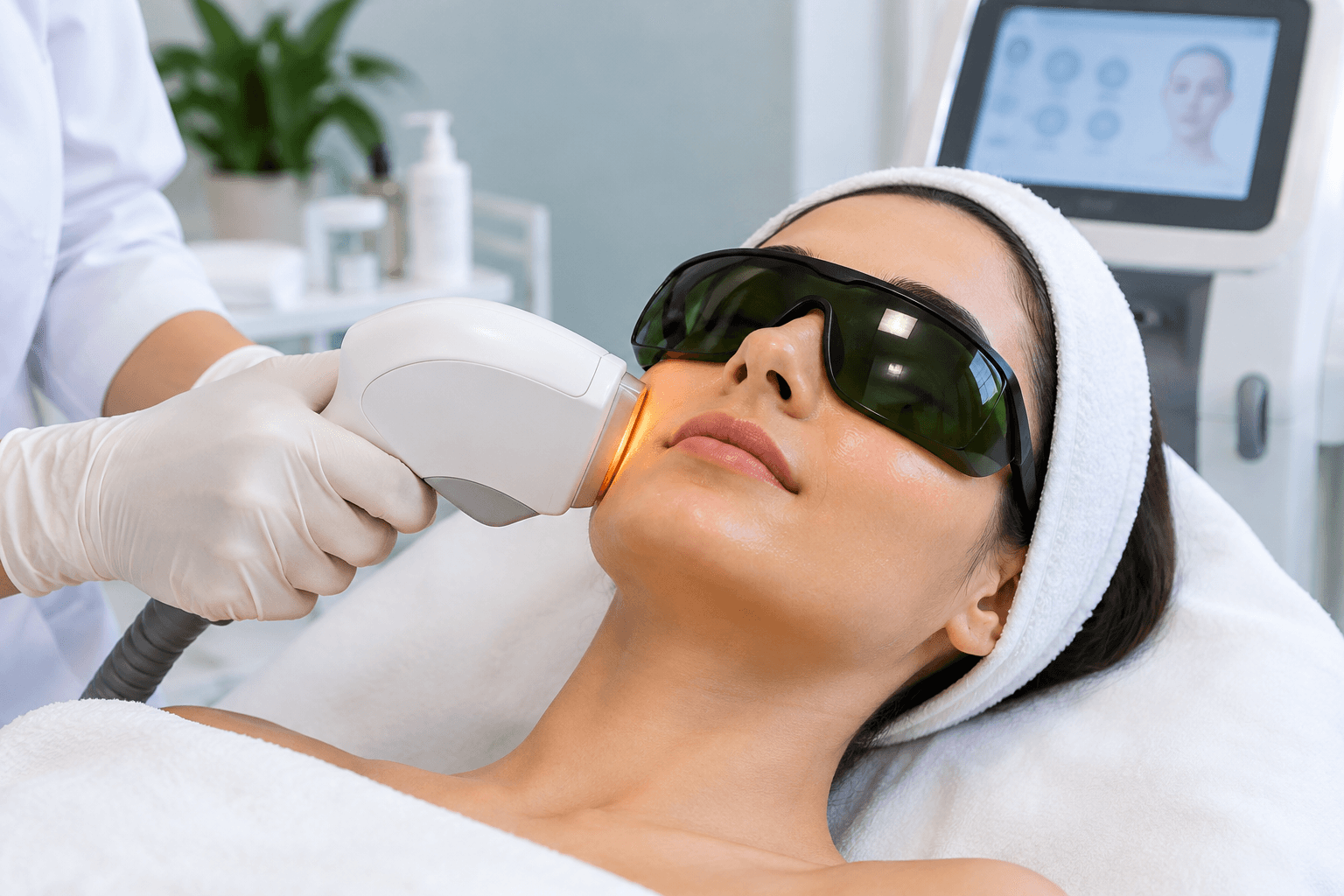
Once you're ready for the treatment, a technician or dermatologist will apply gel to your clean skin. You will wear dark glasses to protect your eyes. The handheld IPL gadget will be placed directly on your body. The session will typically last about 20-30 minutes. Large areas could take an hour or longer.
While most people are comfortable with the light pulses, the treatment may sting slightly. It may feel like someone is snapping a rubber band around you. Your dermatologist can give you a numbing cream to use 30-60 minutes before the therapy begins.
IPL Recovery
You may feel like you have a sunburn for 4-6 hours after you've finished. Ice packs and cool washcloths can help you feel better.
Your skin may get red or bruised for a day or two. Some of your brown patches may darken, but they should disappear within a few weeks.
As you heal:
If your skin hurts, don't put on makeup.
Apply moisturizing lotion.
Use sunscreen to protect yourself. Make sure it has a minimum SPF of 30 and a physical blocker, such as zinc. Even if the weather is cloudy, reapply it every two hours.
Wash your face using a cleanser designed for sensitive skin.
Your dermatologist can advise you on when it is okay to resume your normal skin care routine. It may take a week.
Most people get three to seven sessions. It depends on the problem being treated. You'll have two to four weeks between visits. It may take a few weeks before you notice any improvements to your skin.
Intense Pulsed Light Therapy Costs
When pursuing IPL therapy, you should consider a few factors, including the cost.
These surgeries are expensive, and cosmetic procedures are typically not covered by insurance. Check with your dermatology clinic to see if they provide payment plans. Some practices also provide discounts for several sessions.
Although IPL can improve the appearance of your skin, it cannot prevent future aging. It also does nothing to address the underlying cause of your skin's problem.
How long IPL results last varies. The results may differ depending on your area of concern. For example, treated veins or spots may not return, but new ones may appear later. To maintain your appearance, you can schedule follow-up treatments once or twice a year.
Intense Pulsed Lighting at Home
While most IPL procedures are performed by a doctor, you can accomplish IPL hair removal at home. These handheld devices are safe and effective, but they require multiple sessions to achieve the desired outcomes.
At-home IPL is similar to that performed in a doctor's office, with the exception that a less strong light is used for safety reasons. Simply touch it to your skin and push the button to direct the light to the places you wish to treat. This practice is repeated one to three times every week.
Alternatives To IPL Treatment
Other treatments for treating skin blemishes, fine wrinkles, and redness include:
Microdermabrasion. This procedure employs microscopic crystals to gently rub off your skin's top layer, known as the epidermis.
Chemical peels. These are similar to microdermabrasion, but instead of crystals, they apply chemical solutions to your face.
Laser resurfacing. This eliminates the skin's damaged outer layer, promoting the formation of collagen and new cells. Lasers use a single wavelength of light in a concentrated beam. In contrast, IPL treats a variety of skin disorders by delivering pulses or flashes of various types of light.
Fraxel laser therapy. This is comparable to laser resurfacing, except it does not remove the upper layer of skin. It can enhance fine wrinkles, skin texture, skin tone, scars, and dark spots while requiring less recovery time.
Takeaways
IPL treatment can effectively treat a wide range of skin issues, including age spots, fine wrinkles, acne, redness, and unwanted hair. Although IPL therapy is likely to produce positive outcomes with few adverse effects, it is not suitable for everyone. Consult a dermatologist to determine if IPL treatment is a good fit for you.