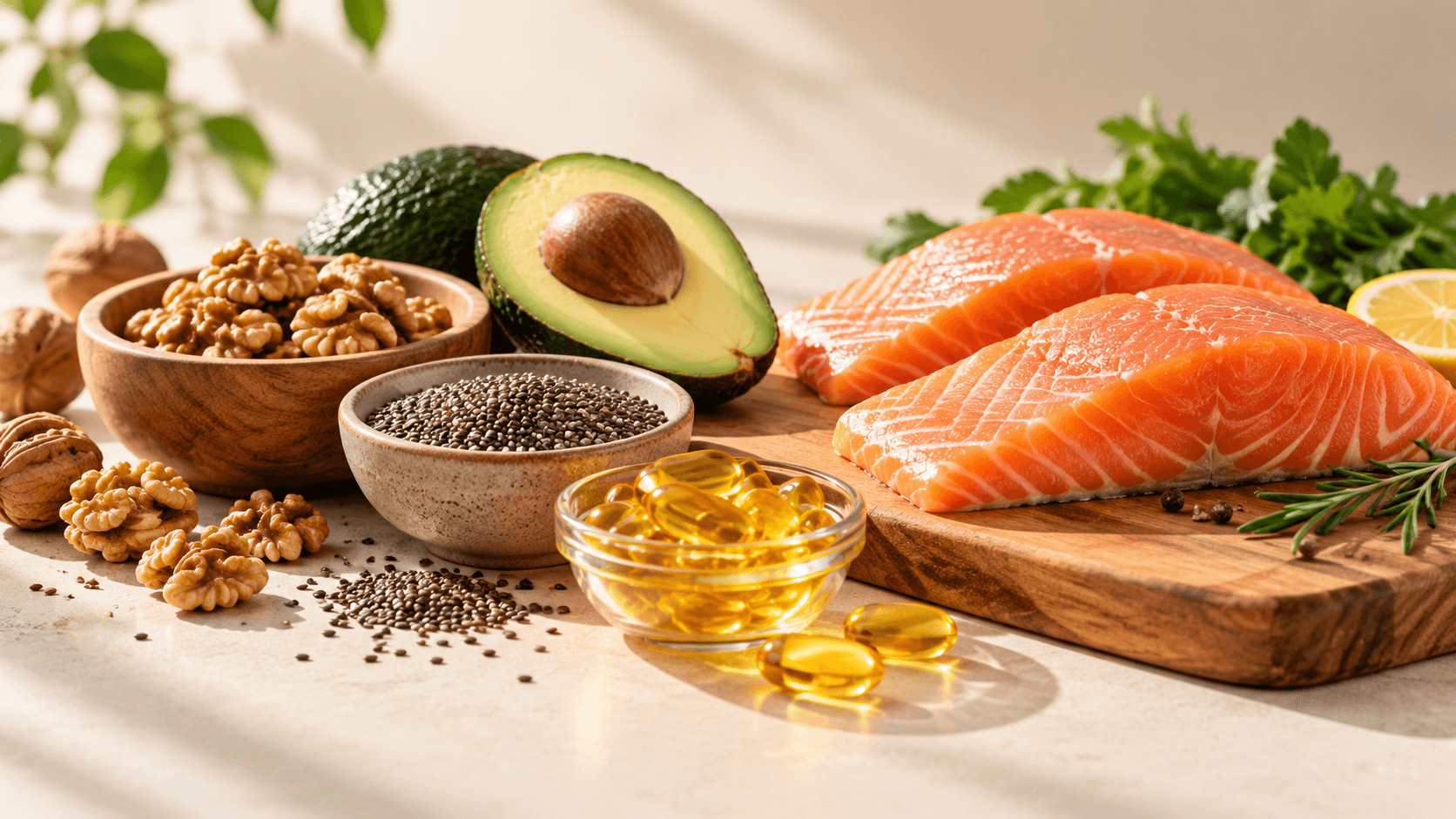
One significant benefit is that it can help decrease your triglycerides. DHA and EPA are omega-3 fatty acids found in seafood, while ALA is found in plants. Fatty fish (such as salmon and mackerel), flaxseed, and chia seeds are all good sources of omega-3s.
What are omega-3 fatty acids, explained simply?
Omega-3 fatty acids (omega-3s) are polyunsaturated fats that play key roles in the body. Your body cannot create the amount of omega-3s required for survival. So omega-3 fatty acids are necessary nutrients, which means they must be obtained from your diet.
What are fatty acids?
There are two types of fatty acids: saturated and unsaturated. Unsaturated fat is further broken down into polyunsaturated and monounsaturated fats. These are regularly used phrases on nutrition labels.
Fatty acids are chain-like chemical compounds composed of carbon, oxygen, and hydrogen atoms. The chain's backbone is made up of carbon atoms, with oxygen and hydrogen atoms latching onto accessible slots.
Saturated fat has no more open slots. A monounsaturated fat has a single open spot. A polyunsaturated fat contains more than one available spot.
Saturated fats are commonly referred to as "bad" or "unhealthy" fats since they raise your chance of developing ailments such as heart disease and stroke. Unsaturated fats (polyunsaturated and monounsaturated) are regarded "good" or "healthy" fats because they promote heart health when consumed in moderation.
Omega-3s, a type of polyunsaturated fat, are a better alternative to saturated fat in the diet.
What exactly do omega-3 fatty acids do?
Omega-3 fatty acids help all of your cells work properly. They play an important role in the construction and function of your cell membranes. Omega-3s are essential for all of your cells, but they are particularly abundant in the cells of your eyes and brain.
Furthermore, omega-3s give your body with energy (calories) and promote the health of numerous physiological systems. These include the cardiovascular and endocrine systems.
What are some examples of omega-3 fatty acids?
There are three primary forms of omega-3 fatty acids:
EPA (Eicosapentaenoic Acid). EPA is known as "marine omega-3" since it is present in fish.
DHA (Docosahexaenoic Acid). DHA is a marine omega-3 found in fish.
ALA (Alpha-Linolenic Acid). Plants contain omega-3 in the form of ALA.
Omega-3 fatty acids are necessary nutrients that must be obtained through diet. When you consume ALA, your body converts some of it into EPA and then DHA. However, this mechanism only produces a modest quantity of EPA and DHA. Therefore, dietary supplies of EPA and DHA (such as fish) are needed.
What are the advantages of omega-3 fatty acids?
Omega-3 fatty acids have numerous potential benefits for cardiovascular health. One significant benefit is that they help reduce triglyceride levels. Too many triglycerides in your blood (hypertriglyceridemia) increases your chances of developing atherosclerosis, which can lead to heart disease and strokes. So it's critical to keep triglyceride levels under control. Furthermore, omega-3s may benefit you by increasing your HDL (good) cholesterol and lowering your blood pressure.
According to certain research, omega-3s may reduce your risk of:
Cardiovascular disease (CVD).
Death if you have CVD.
Abnormal heart rhythm (arrhythmia) causes sudden death.
Blood clots.
In addition to heart health, omega-3s may reduce your risk of developing:
Certain types of cancer, including breast cancer.
Alzheimer's and dementia.
Age-related macular degeneration (AMD).
These and other potential benefits are still being investigated by researchers.
Are omega-3 fatty acids healthy for you?
When you include omega-3 fatty acids in your diet, you may reduce your risk of cardiovascular disease. In general, eating foods (such as fish) is preferable to taking medications.
Omega-3 dietary supplements (fish oil tablets) may provide some benefits to certain people. However, it is best to continue with caution. When it comes to fish oil supplements, it is critical not to self-prescribe. Never take over-the-counter (OTC) supplements without first consulting your healthcare physician. Your doctor, including your primary care provider or cardiologist, can recommend dietary supplements based on your risk factors and cholesterol levels. Depending on the dosage, several supplements may:
Interfere with certain of your prescribed drugs.
Produce unwanted side effects.
Increase your chance of atrial fibrillation.
If you use antiplatelet or anticoagulant medications, your risk of bleeding increases.
Furthermore, different supplements include varying amounts of omega-3 fatty acids. Some of these formulas have not been scientifically proven to improve heart health. The most promising formulation in research is icosapent ethyl (a refined version of EPA). This sort of supplement may benefit those who match all of the following criteria:
Have been diagnosed with atherosclerotic cardiovascular disease.
Have high triglycerides (135 to 499 mg/dL).
Are taking statins and keeping their LDL cholesterol under control (under 100 mg/dL).
Overall, clinical trials on the effects of omega-3 supplements have yielded conflicting results. Some research suggest that omega-3 supplements help protect your heart, while others indicate little effect. This could be due to differences in research techniques (such as dosage quantities, omega-3 formulations, and the individuals that participated in the study).
Dietary guidelines and recommendations may vary as experts conduct further research on this topic. So, it's critical to speak with your provider, who can provide specialized recommendations based on your specific needs and medical history. They will deliver the most accurate, current, and scientifically supported information.
Fish is the richest dietary source of omega-3s. However, this vital nutrient can also be obtained from certain plant-based diets.
What are the finest sources of omega-3 fatty acids?
Fish are the best source of omega-3s.
The chart below includes several fish that can help you get more omega-3 fatty acids in your diet. The serving size for each type of fish listed is 3 ounces (oz.), and nutrient information is provided by the United States Department of Agriculture. While some fish have a minor amount of ALA, the chart shows the overall DHA and EPA content for uniformity. Unless otherwise specified, these totals reflect the DHA and EPA content of raw (uncooked) fish.
Mackerel2.0 gramsSalmon (farmed, Atlantic)1.7 gramsHerring (Atlantic)1.3 gramsAnchovy1.2 gramsSalmon (wild, Atlantic)1.2 gramsWhitefish1.1 gramsTuna (Bluefin)1.0 gramsHalibut (Greenland)0.8 gramsSardines (Atlantic, canned in oil)0.8 gramsTuna (Albacore, canned in water)0.7 gramsBluefish0.7 gramsStriped bass0.6 gramsRainbow trout (wild)0.5 gramsTuna (light, canned in water)0.5 grams
Should I be concerned about mercury in fish?
Some fish contain higher levels of mercury than others. These are often fish species that feed primarily other fish, and their tissues collect mercury more quickly as a result of their diet. Some of the fish with the highest mercury levels are:
King Mackerel.
Marlin.
Orange roughy.
Shark.
Swordfish.
Tilefish.
Tuna (Bigeye).
Perch (fresh water).
Largemouth Bass.
Striped Bass.
Pikeminnow.
White sturgeon.
Blackfish (bowfin).
Catfish are wild.
Black crappie.
If you enjoy catching your own fish, check with local or state authorities to ensure that fish taken in nearby bodies of water are safe to consume.
You should restrict your consumption of mercury-rich fish since too much mercury can result in mercury poisoning. This illness can harm your brain, nervous system, and other bodily systems. Some people are more sensitive to mercury or more likely to experience issues as a result, therefore they should avoid eating these fish entirely. These groups include:
Pregnant ladies.
Children aged eleven or younger.
Many forms of fish are healthy sources of omega-3s for pregnant women and children when consumed in moderation (up to 12 ounces per week). These fish include the following:
Anchovy.
Herring.
Mackerel (pacific chub or Atlantic).
Salmon.
Sardine.
Trout (fresh water).
Tuna (light and canned).
Whitefish.
Albacore tuna (white flesh) has higher mercury than canned light tuna. In general, you should not consume more than 6 ounces of Albacore tuna each week. If you are pregnant or breastfeeding, see your healthcare provider about the amount that is safe for you.
What if I cannot eat fish?
There are various reasons why you cannot consume fish. You may be allergic, or you may consume a vegetarian or vegan diet. In these circumstances, you can turn to plant-based omega-3 sources, which include the nutrition in the form of ALA. Alternatively, you might talk to your doctor about supplements like icosapent ethyl.
Ground or milled flaxseed is an excellent source of ALA. Aim to incorporate roughly 2 tablespoons into your meals throughout the day. Sprinkling it in oatmeal, smoothies, or yogurt is an easy way to incorporate it.
Other sources of ALA are:
Algae oil.
Canola oil.
Chia seed.
Edamame.
Flaxseed oil.
Soybean oil.
Walnuts.
The amount of ALA required depends on a variety of factors, including your age and gender.
Below are some general rules for adults:
Males: 1.6 g.
Females: 1.1 g.
Pregnant women: 1.4 g.
Breastfeeding women: 1.3 grams.
Consult your healthcare professional or a dietitian to understand how to incorporate ALA into your diet.
How much omega-3 should I take?
Ask your doctor how much omega-3 you require. Research demonstrates that the benefits vary based on your medical history.
In general, the American Heart Association recommends that persons without a history of heart disease consume at least two servings of fish each week (6 to 8 ounces overall). If you have heart disease or high triglycerides, you may benefit from eating additional omega-3 fatty acids. However, you must consult with your provider to determine the optimal amount for you.
Some people may not obtain enough omega-3 from their diet, therefore they may benefit from taking fish oil supplements. However, experts are still investigating whether and how people should utilize these supplements. So, only take them with the supervision of a healthcare professional.
Can I have too many omega-3 fatty acids?
Consult your healthcare physician if you consume 3 grams or more of omega-3 fatty acids per day. High quantities of these fatty acids might lead to bleeding and other complications.