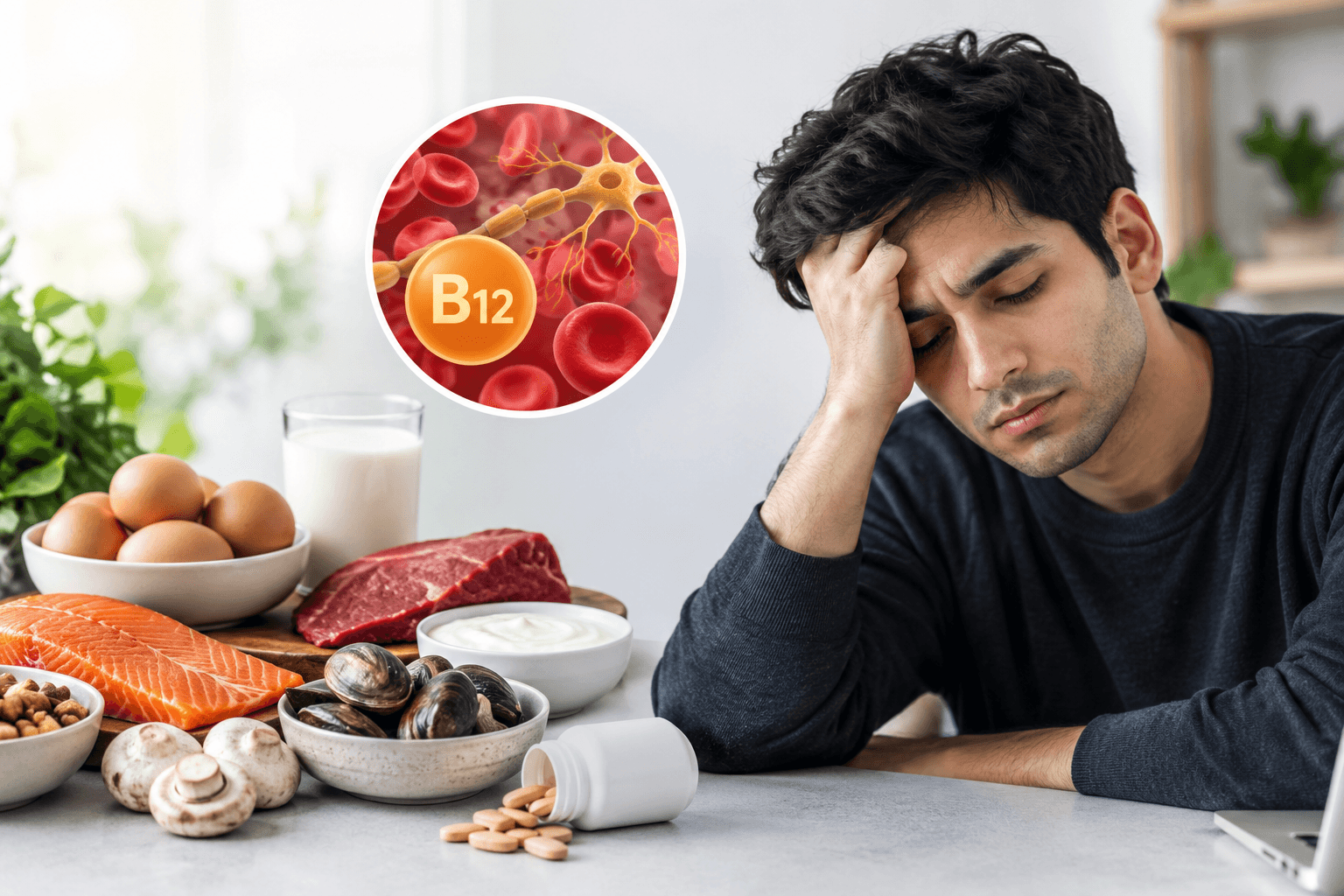
Vitamin B12 deficiency is a curable illness that occurs when you do not get enough vitamin B12 in your diet or your body does not absorb it adequately. Vitamin B12 insufficiency can result in physical, neurological, and psychological problems. It can be treated with vitamin B12 supplements.
What is Vitamin B12 Deficiency?
Vitamin B12 deficiency, also known as cobalamin deficiency, occurs when your body does not get or absorb enough vitamin B12 from the foods you eat. Vitamin B12 is an essential mineral for your body's production of red blood cells and DNA, the genetic material found in all of your cells. It's critical to how your body works. Without therapy, vitamin B12 deficiency can lead to physical, neurological, and psychosocial issues.
What is Vitamin B12?
Vitamin B12 is an essential ingredient that keeps your nerve cells and red blood cells healthy. It also aids your body's ability to produce DNA.
Your body does not produce vitamin B12 on its own. To obtain vitamin B12, you must consume foods and beverages containing it. Vitamin B12 is mostly found in animal products such as fish, meat, dairy, and eggs. Cereals, breads, plant-based milks, and nutritional yeast are examples of fortified foods (foods that have extra vitamins and minerals).
Adults require approximately 2.4 micrograms (mcg) of vitamin B12 per day. Women who are pregnant or breastfeeding require additional nutrients. Babies and children require different amounts of B12 depending on their age.
How does my body absorb Vitamin B12?
To absorb vitamin B12 from the food you eat, your body must do two things:
Hydrochloric acid in your stomach dissolves vitamin B12 from the food it contains.
Vitamin B12 mixes with a protein called intrinsic factor, which is produced by your stomach.
Your digestive tract can then absorb vitamin B12.
What is Vitamin B12 deficient anemia?
Vitamin B12 deficiency anemia occurs when your body does not produce enough healthy red blood cells. Vitamin B12 deficiency can result in anemia since it aids in the formation of red blood cells. However, a vitamin B12 shortage is not always associated with anemia.
Symptoms & Causes
Symptoms of Vitamin B12 Deficiency
Vitamin B12 insufficiency symptoms may start gradually and worsen over time. You may not experience any symptoms while having a low vitamin B12 level in your body. Vitamin B12 insufficiency can result in physical, neurological, and psychological problems.
Physical symptoms may include:
Feeling extremely exhausted or feeble.
Experience nausea, vomiting, or diarrhea.
Not feeling as hungry as usual.
Losing weight.
Have a painful mouth or tongue ulcers.
Have pale skin
Neurological symptoms may include:
Numbness or tingling in the hands and feet
Vision problems
Having difficulty remembering information or becoming confused quickly
Having difficulty walking or speaking as you normally do
Psychological symptoms may include:
Feeling depressed.
Feeling irritable.
Having a shift in your mood or behavior
Vitamin B12 deficiency leads to
Vitamin B12 deficiency occurs when you do not take enough vitamin B12 or your body does not absorb it. Vitamin B12 insufficiency can result from the following situations or conditions:
Lack of vitamin B12 in your diet: People who do not consume enough vitamin B12-containing foods or who do not consume B12-fortified meals may develop a deficiency.
Gastritis is an inflammation of the stomach lining and a major cause of vitamin B12 deficiency. It can cause vitamin B12 insufficiency due to a lack of hydrochloric acid in the stomach, which is required for B12 absorption.
People with pernicious anemia do not produce intrinsic factor. Your body need the intrinsic factor in order to absorb the vitamin B12. People suffering from pernicious anemia are deficient in vitamin B12.
Digestive diseases: Diseases of the digestive tract, such as Crohn's disease and celiac disease, can hinder your body from adequately absorbing vitamin B12.
Surgery: People who have undergone gastrointestinal surgery, such as a gastric bypass, may have trouble absorbing vitamin B12.
Alcohol use problem can harm your digestive system and result in vitamin B12 deficiency.
MTFHR deficiency is a gene mutation (change) that makes it difficult to properly metabolize B12. To function properly, you need higher amounts of vitamin B12 and, in some cases, a methylated B12 supplement.
Transcobalamin II deficiency is an uncommon hereditary condition that makes it difficult for vitamin B12 to circulate throughout your body.
Risk Factors
If you have any of the following risk factors, you are more likely to develop a vitamin B12 deficiency.
People over the age of 75 are more likely to suffer vitamin B12 insufficiency because their bodies are often unable to adequately absorb it.
Having a digestive system disorder: Digestive problems might make it harder for your body to absorb vitamin B12.
Following a vegan or vegetarian diet: Vitamin B12 is only available naturally in animal products such as meat and milk. As a result, persons who follow a vegan or vegetarian diet are more likely to be deficient in vitamin B12 if they do not take a B12 supplement.
Taking specific medications: Metformin, proton pump inhibitors, H2 blockers, and oral birth control pills can all induce low vitamin B12 levels in the body.
People who have Sjögren's syndrome are more likely to be deficient in vitamin B12.
Drinking excessive amounts of alcohol: Chronic alcohol consumption can harm your digestive system and lead to vitamin B12 deficiency.
Complications of B12 Deficiency
Left untreated, vitamin B12 deficiency can have long-term effects on your nervous system and brain. More serious side effects include:
Peripheral neuropathy.
Degeneration of the spinal cord
Paralysis
Urinary or bowel incontinence
Erectile dysfunction.
Paranoia and delusions.
Memory loss.
Diagnoses and Tests
How is a vitamin B12 deficiency diagnosed?
Vitamin B12 deficiency can be difficult to identify since symptoms may be absent or similar to those of other dietary deficiencies. Blood tests are typically used by healthcare providers to detect B12 deficiency in persons at high risk of getting it.
The following tests can help diagnose vitamin B12 deficiency:
Complete Blood Count (CBC)
Vitamin B12 Test
Methylmalonic Acid (MMA) Test
Homocysteine Test
Management & Treatment
How is a vitamin B12 deficit treated?
Getting more vitamin B12 corrects the deficit. Providers may prescribe cyanocobalamin, a synthetic version of vitamin B12. Vitamin B12 therapy options include the following:
Vitamin B12 Oral Medication
Vitamin B12 injections.
Vitamin B12 nasal sprays or gels
Eating more B12-rich foods (such as meat, fish, eggs, and dairy)
Depending on the origin of the shortage, you may just need medication until your vitamin B12 levels return to normal, or you may require B12 therapy for the remainder of your life.
Outlook / Prognosis
What should I expect if I have this condition?
What you can expect depends on how soon the vitamin B12 shortage is detected and how low your levels are. If your B12 deficiency is mild, you may see immediate results from medication and eating more B12-rich foods.
If you have chronically low B12 levels or have underlying health issues that contribute to the deficiency, you may need to take B12 for the rest of your life.
Work with your healthcare professional to choose the best treatment for you depending on your specific condition.
Prevention
How can I avoid B12 deficiency?
Most people can avoid vitamin B12 insufficiency by eating foods containing vitamin B12.
There are several options for absorbing B12:
Animal food sources containing vitamin B12 include fish, milk, dairy products, eggs, poultry, and red meat.
Fortified foods are foods that have been supplemented with vitamins and nutrients that do not occur naturally. Breakfast cereals, nutritious yeast, plant milk, and specific breads are examples of fortified foods. Check the food label to determine if it's been fortified with vitamin B12.
Vitamin B12 dietary supplements: Many multivitamins contain vitamin B12. There are additional pills containing simply vitamin B12. Consult your healthcare provider or pharmacist to determine which supplement is best for you.
Other steps you can take to prevent vitamin B12 insufficiency include:
Avoid drinking: Excessive alcohol use might harm your digestive system and impair your ability to absorb vitamin B12.
Do your best to manage a digestive condition: If you have a digestive disease, make sure to follow your doctor's advice to stay healthy.
Vitamin B12 is an essential nutrient for good health. However, it is one of those things that you may not consider until you experience symptoms of a lack of it. Most of us can avoid vitamin B12 insufficiency by ingesting enough of it in our diet. If you have risk factors for developing vitamin B12 deficiency or are experiencing symptoms, see a doctor for a blood test to determine your levels.