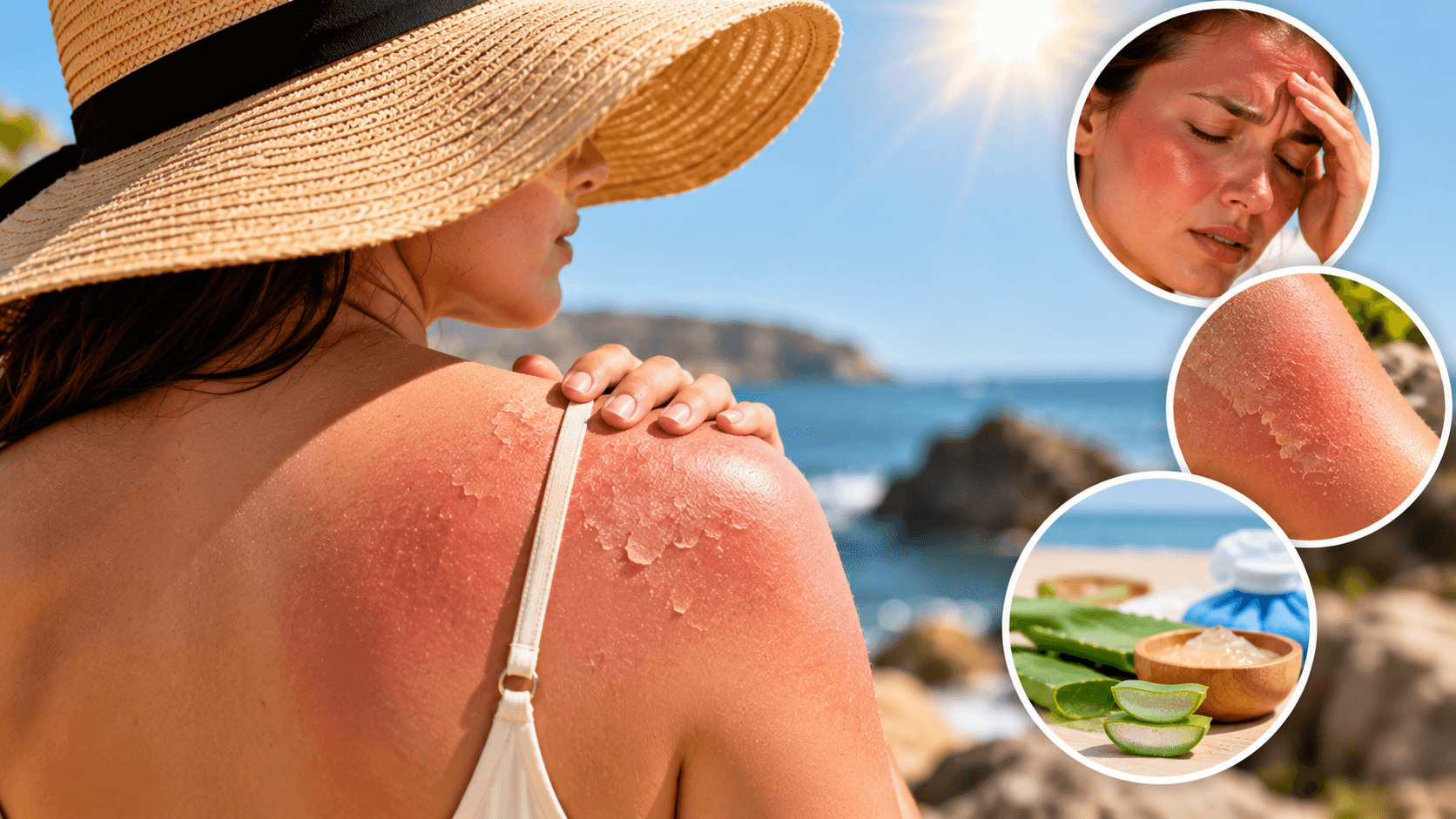
What is Sun Poisoning?
Sun poisoning does not imply you have been poisoned. Sun poisoning is not a recognized medical phrase, although it typically refers to a severe sunburn that appears to be an allergic reaction. It's a burn that does more than just redden or color your skin; it also makes you feel ill and extremely unpleasant. In some situations, people may use the term "sun poisoning" to refer to more rare allergic reactions to sunshine.
Sun Poisoning Symptoms
There is no such thing as a good sunburn. All sunburns are the result of UV radiation from the sun or a tanning equipment. Multiple sunburns cause your skin to age faster and increases your chance of skin cancer in the long run.
Even a minor burn will cause your skin to turn excruciatingly red if you have fair skin, or darker than usual if you have dark complexion. It could also feel heated to the touch. Symptoms may persist many days. However, severe sunburn, also known as sun poisoning, can exacerbate your symptoms. It could cause:
Blisters or peeling skin
Severe rash
Severe pain
Swelling
Painful, gritty eyes.
Lip blisters.
Headache
Fever and chills.
Nausea
Dizziness
Some of these symptoms, such pain and blistering, are the direct result of skin damage. Other symptoms, like as headache, nausea, and dizziness, are caused by dehydration, which can occur when the burn sucks fluid away from the rest of your body.
You may not notice how severe a sunburn is right away. Pain and skin color changes typically begin within a few hours and peak around 24 hours. While mild sunburn symptoms may resolve quickly, severe burn symptoms, such as peeling skin, may last for weeks.
Heat rash versus sun poisoning
Sun poisoning can induce a rash that is hot to the touch, but it is not the same as a heat rash. A heat rash occurs when sweat becomes trapped in pores and glands, irritating the skin and resulting in an itchy, pimply rash. It is frequent in both babies and adults who live in humid environments.
Sunstroke versus sun poisoning
Sunstroke and sun poisoning are two distinct conditions. Sunstroke, often known as heat stroke, is a life-threatening illness that occurs when you become extremely hot. You can get it by working out too hard outside on a hot, humid day. During heat waves, some people have heatstroke while driving in hot cars or staying in residences without air conditioning.
Treating Sun Poisoning
If you notice any signs of sunburn, the first thing you should do is get out of the sun. You can begin experiencing relief by:
Take a chilly (not cold) shower or bath.
Applying cool compresses.
Drinking more fluids.
Taking acetaminophen or ibuprofen to relieve pain.
Using aloe gel or moisturizer
To decrease inflammation, use 50,000-400,000 IU of over-the-counter vitamin D3.
When going outside, wear slacks and long sleeves to completely cover sunburned regions.
Severe sun poisoning therapy
If your sunburn is severe enough to resemble sun poisoning—with blisters, swelling, fevers, chills, upset stomach, headaches, confusion, faintness, or other indicators of dehydration—see your doctor to ensure you receive the appropriate treatment. Those treatments may include:
Intravenous fluids
Steroid Creams or Pills
Prescription pain medication
Apply antibiotics to your skin.
Sun poisoning scars.
Most sunburns are not severe enough to leave scars. They are typically first-degree burns, affecting the skin's outer layers. Some are second-degree burns, which penetrate the middle layers and can sometimes leave scars. In rare situations, the sun can produce a third-degree burn, which is the most serious type and affects the deepest layers of skin. That type of burn is more likely to leave scars. If you have a third-degree sunburn, you may need additional treatments, such as skin grafts, which are operations that transfer healthy skin to the injured area.
With a lighter burn, you can do things to protect your skin and speed up the healing process. To protect the wounded skin, apply petroleum gel or ointments as directed by your doctor. Stop yourself if you feel the impulse to pop or peel blisters. It is best to let blisters heal on their own or seek medical attention if they become too large.
How to avoid sun poisoning.
To avoid sunburn and sun poisoning, observe these fundamental sun protection guidelines:
Wear sunscreen. Choose one with an SPF (sun protection factor) of at least 30 and "broad-spectrum" on the label, indicating that it protects against UVA and UVB radiation. Apply it to your skin 15-30 minutes before going outside in the sun. Reapply every 80 minutes, especially after sweating or being in the water.
Limit your sun exposure. The sun's rays are at their highest between 10 a.m. and 4 p.m., so exercise caution during those hours. Seek shade whenever possible. Remember that water, snow, and sand can magnify the sun's harmful rays.
Cover up. Wear sunglasses, a wide-brimmed hat, and clothing that protects your arms and legs.
Avoid tanning booths and beds. Tanning devices, like the sun, can cause burns. And it's a fallacy that acquiring a foundation tan indoors can protect you against sunburn outside. Tanning also causes skin damage.
Check on your medication. Consult your doctor if any medications you take may make your skin more susceptible to sunlight. Some acne treatments, antibiotics, antidepressants, diuretics, heart medications, and birth control pills, for example, irritate the skin. Some antibacterial drugs and skin scents are also capable of this.
Understand your other dangers. If you have fair skin, a family history of skin cancer, or live or spend time near the equator, you are more likely to get burned and acquire sun poisoning. Some medical illnesses, like as lupus, may increase your risk and provide an additional reason to avoid excessive sun exposure.
Can persons with dark skin develop sun poisoning?
Yes, while those with fair skin, particularly those with blue eyes and red or blonde hair, are most vulnerable, persons of any skin color can develop sunburns and other symptoms of sun poisoning. The extra pigment, known as melanin, in darker skin provides only limited protection from burning. Sun protection techniques, such as sunscreen, function equally well on dark and light skin.
Other Types of Sun Poisoning
If someone claims to have suffered sun poisoning, they may not be referring to a serious sunburn. The phrase is also used to describe various reactions to sunshine that are classified as sun allergies. This includes:
Polymorphic light eruption (PMLE)
PMLE is a rash that appears after sun exposure and affects approximately 15% of people globally. The origins are unknown, however many people who are prone to PMLE experience breakouts in the spring, when bright weather increases, or when they travel to sunnier places than they are accustomed to. It is probable that when you develop this rash, your immune system is responding to a chemical alteration in your skin induced by light exposure.
The skin rash normally appears several hours after being out in the sun. The rash may be itchy and include:
Small red lumps.
Larger red spots.
Blisters are less common.
Other less common symptoms are:
Fever
Headache
Nausea
PMLE treatment consists primarily of staying out of the sun and protecting yourself while in it. Within a few days, the rash should clear up on its own. Furthermore, as time passes, you may become less sensitive to sunlight.
If necessary, your doctor may recommend antihistamines or other medications.
If you're prone to severe PMLE when you go on a sunny vacation, your doctor may prescribe a corticosteroid medication, such as prednisone, to prevent the rash.
Note: A similar illness known as actinic prurigo affects primarily Native Americans and appears to be inherited. Symptoms can start in the spring and last for months.
Solar urticaria.
This is a type of sun allergy in which you develop hives (raised, red, itchy, or burning bumps) within minutes of being exposed to sunshine. The rash may go as fast as it developed or last for a few hours. It rarely lasts longer than a day.
If big portions of your skin break out in hives, you may get:
Headache
Nausea
Vomiting
Breathing problems
If you experience frequent or severe symptoms, your doctor may test you to determine which type of light causes your hives. The most common culprits are UVA (ultraviolet A) and visible light from the sun. Using the correct sunscreen can help with UVA light but not with visible light, thus persons who are sensitive to visible light should wear protective clothing and seek shade when they go outside.
Hives can be treated with antihistamines and other medications. Your doctor may also recommend that you install protective film on your car's windows.
Takeaways
Whether you call it sun poisoning or not, getting a serious sunburn or a terrible allergic rash from sun exposure can make you unhappy and ruin your outdoor activities. That's all the more important to understand your risks and protect yourself with sunscreen, shade, and appropriate clothes. If you suspect you have a sunburn or a rash that resembles sun poisoning, consult your doctor and get appropriate treatment.