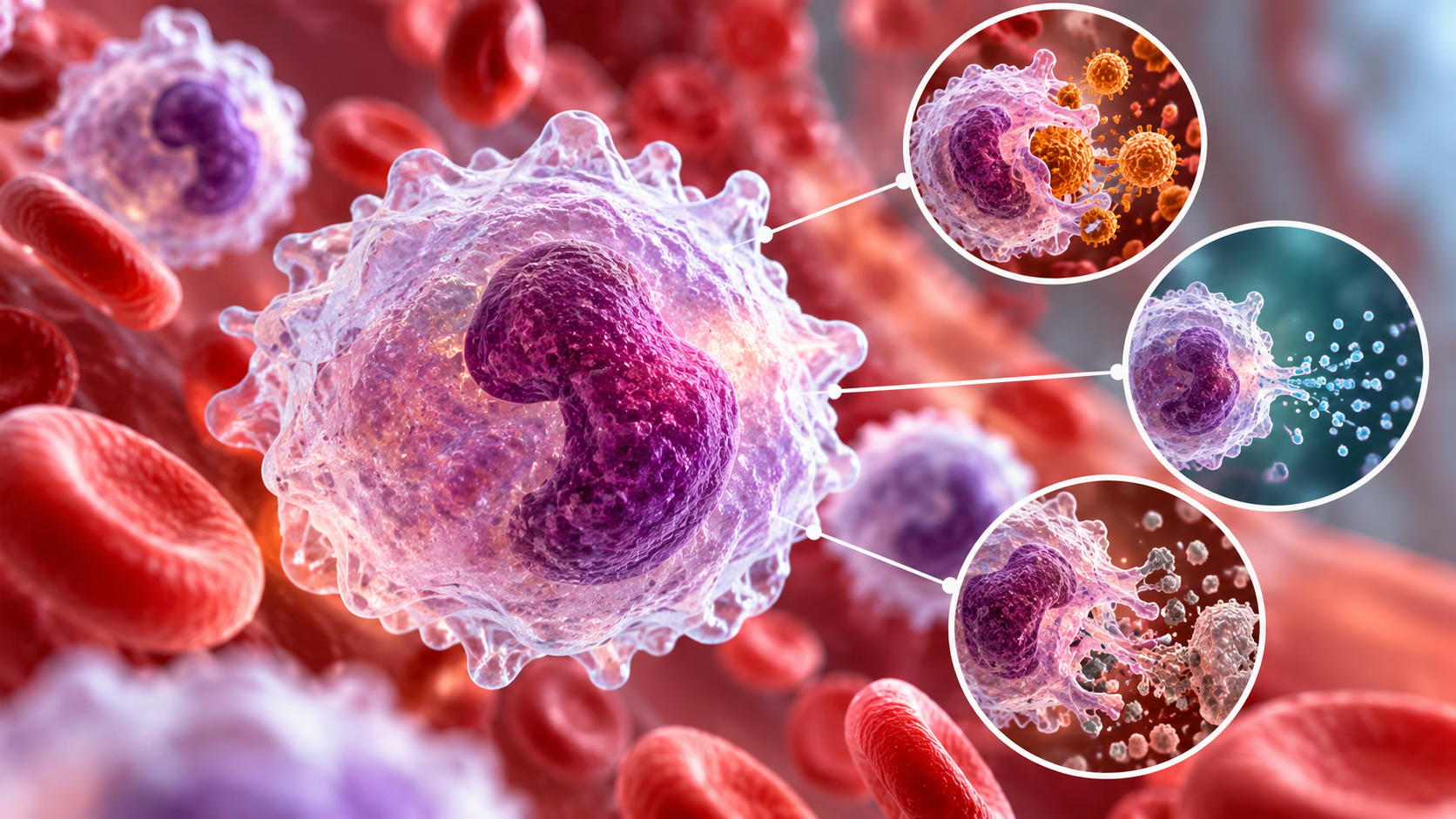
Your blood consists of red blood cells, white blood cells, platelets, and plasma. White blood cells account for only around 1% of your blood, yet they serve a crucial job. They act as part of your immune system, protecting you from infection.
Monocytes are one of five distinct types of white blood cells. The other cells are lymphocytes, basophils, neutrophils, and eosinophils.
What are monocytes?
Monocytes are a type of white blood cells. White blood cells are an important component of your immune system. Monocytes, like other types of white blood cells, are created in the bone marrow before entering the bloodstream. Monocytes migrate from your bloodstream to your lung, liver, or spleen tissue, where they grow into macrophages. These are scavenger cells that combat infections, eliminate cancer cells, and assist other white blood cells in removing dead or damaged tissues.
Monocytes are one of five distinct types of white blood cells. Others include:
Lymphocytes produce antibodies to fight against viruses and bacteria.
Basophils secrete substances like histamine to aid your body's immunological response.
The most prevalent white blood cells are neutrophils, which serve as your body's initial line of defense. They kill both bacteria and fungus.
Eosinophils, which aid in your body's allergic reaction and eliminate cancer cells and parasites
How Are Monocytes Measured?
Your doctor will analyze a blood sample to determine your monocyte levels.
Complete blood count (CBC) and differential
This blood test examines various components of your blood. You may also hear it referred to as a whole blood count or blood cell count. Your doctor may order one as part of a standard physical or to determine whether you have an infection or another illness, such as anemia.
A whole blood count measures:
Red blood cells transport oxygen from the lungs to other parts of your body.
Hemoglobin is the protein in your red blood cells that transports oxygen.
Hematocrit indicates how percent of your blood is composed of red blood cells.
Mean corpuscular volume (MCV) measures the average size of your red blood cells.
Platelets are the cells that help your blood clot and stop bleeding.
White blood cells combat infections and other disorders.
The blood differential test informs your doctor about the percentage of each of the five categories of white blood cells. It also indicates whether the various types of white blood cells are in normal proportion to one another, if there are more or less of them than usual, and if any aberrant or immature white blood cells are present.
Absolute monocyte count.
An absolute monocyte count indicates how many monocytes are present in your blood. To calculate it, the lab multiplies the percentage of monocytes in your complete blood count by the total amount of white blood cells in your blood. This number informs your doctor whether your monocyte count is normal, too high, or too low.
A CBC with differential is performed by drawing blood from a vein in your arm into a tube. Unless your doctor has requested other blood tests at the same time, you should not require any particular preparation for this test. Your doctor will tell you if you need to fast prior to these tests.
Normal Monocyte Range
Monocytes account for around 1%-9% of all white blood cells in healthy adults. The absolute monocyte count ranges from 0.2 to 0.6 × 10⁹ per liter of blood. Consult your doctor if you need assistance interpreting test results.
The full spectrum of normal white blood cells includes:
Neutrophils comprise between 55% and 70% of total white blood cells.
Lymphocytes comprise 20-40% of total white blood cells.
Monocytes make up about 2% to 8% of all white blood cells.
Eosinophils make up about 1% to 4% of all white blood cells.
Basophils comprise 0.5% to 1% of all white blood cells.
High monocyte count.
Monocytosis
Monocytosis occurs when the number of monocytes exceeds the usual range. Monocytosis is defined as having an absolute monocyte count of at least 1 × 10⁹ per liter of blood.
Monocytosis rarely causes symptoms. If you do experience symptoms, they are most likely caused by the high monocyte count.
High monocyte count leads to
A high monocyte count is frequently associated with long-term infections, blood problems, or autoimmune diseases.
Some causes of monocytosis are:
Short-term or long-term diseases, including viral infections like COVID-19 or mononucleosis and bacterial infections like tuberculosis.
Blood abnormalities, such as sickle cell disease and hemolytic anemia
Autoimmune or inflammatory illnesses, including inflammatory bowel disease, sarcoidosis, and lupus
Stress can be either short or long term. Intense exercise, as well as emotional stress, can generate a temporary increase in monocyte counts.
Reaction to some drugs, such as steroids.
Pregnancy
Splenectomy (removing your spleen).
Some kinds of cancer, including leukemias and lymphomas,
How to Treat Monocytosis
Monocytosis is merely a symptom; therefore, your treatment will be determined by the underlying cause. Your doctor may run tests to establish the cause of your monocytosis. Once it is determined, they will administer appropriate treatment if necessary.
Low monocyte count.
Monocytopenia
Monocytopenia is defined as a low monocyte count compared to the usual range. Monocytopenia occurs when the absolute monocyte count is below or equal to 0.5 × 10⁹ per liter of blood.
If you have monocytopenia, your symptoms are usually caused by the low monocyte count.
Low monocyte count leads to
A low monocyte count might occur as a result of certain diseases, medical treatments, or trauma that reduce your total white blood cell count. This includes:
Infections including Epstein-Barr virus, adenovirus, and HIV
Bacterial sepsis is a type of bloodstream infection.
taking steroids or immunoglobulin treatment.
Cancer therapies, such as chemotherapy or radiation therapy.
Surgery for your stomach or intestines
Hemodialysis
A hereditary disease called GATA2 deficiency.
Aplastic anemia is a bone marrow condition.
Burn injuries.
Certain malignancies, particularly leukemia and lymphoma. These could include hairy cell leukemia, acute lymphoblastic leukemia, or Hodgkin's lymphoma.
How To Treat Monocytopenia
There is no need to treat monocytopenia itself. Your doctor may run tests to determine what's causing it and treat it if needed.
If a medical therapy creates a low monocyte count, your doctor may adjust your dose or the time you take it. Never stop or change your drugs without consulting your doctor first.
Your doctor will address any underlying conditions or infections that are causing your low monocyte count.
If you are deficient in vitamins that are essential for immune system function (such as B12, C, or D), your doctor may recommend vitamin supplements.
Improving Monocyte Function.
A healthy lifestyle may help you increase monocyte function. For example:
Follow a well-balanced diet.
Exercise regularly.
Lower or manage your stress.
Do not smoke.
Use alcohol in moderation.
Protect yourself from illnesses by often washing your hands and avoiding contact with sick people.
If your monocyte count is abnormally high or low due to a medical condition or medication, follow your doctor's recommendations.
Your doctor may be able to recommend additional strategies to boost your immune system, such as vitamin supplements.