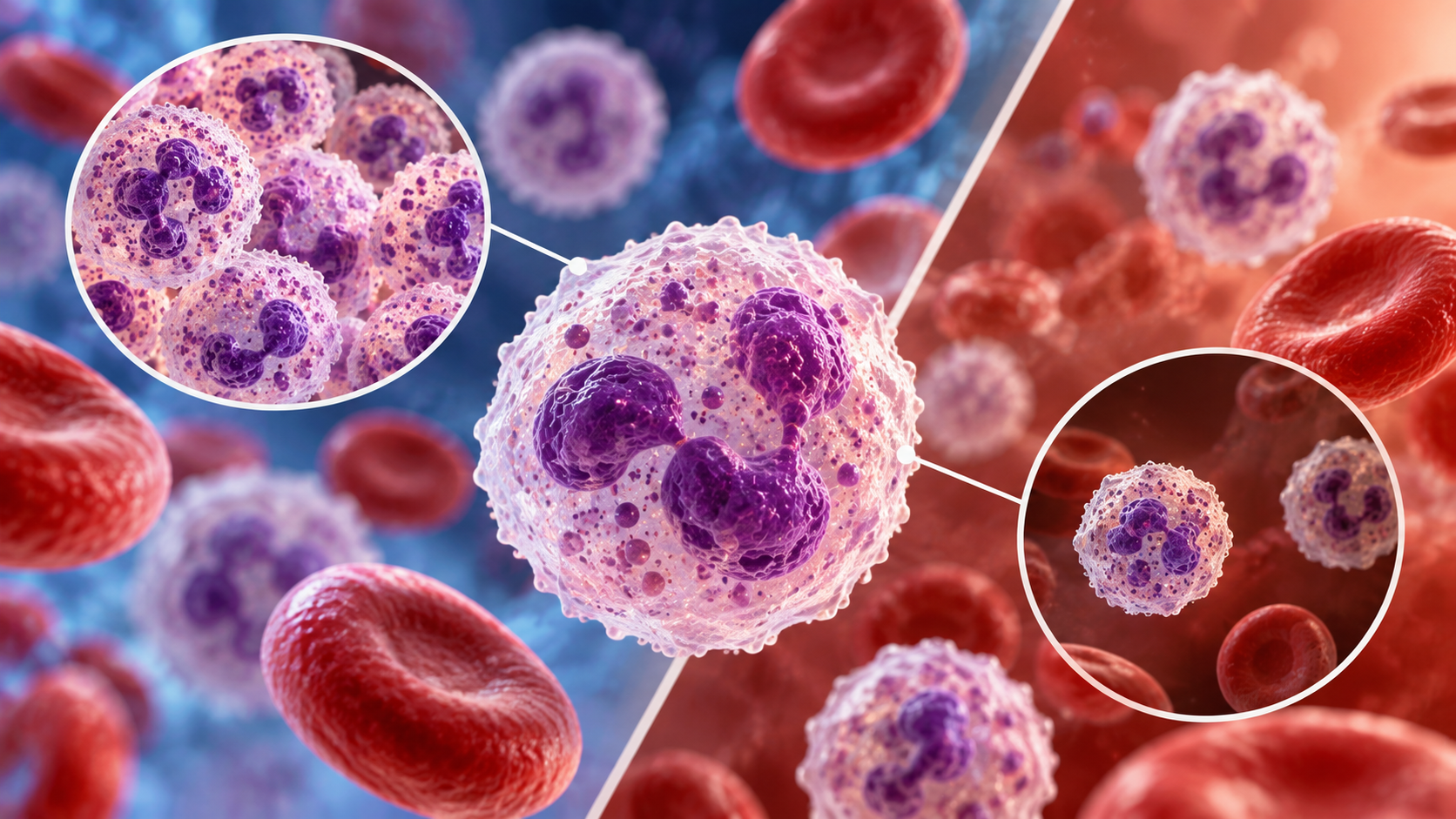
What are neutrophils?
Neutrophils are an important component of the immune system. They are a type of white blood cell that destroys and consumes bacteria and fungi to assist the body in fighting infections and healing wounds. There are many different types of cells in your blood, but neutrophils account for the majority of all white blood cells.
Neutrophils function.
Neutrophils are primarily responsible for helping your body fight infections and heal wounds. Bacteria, viruses, and fungus are pathogens that can infect your body. Neutrophils migrate to the site of an infection and consume or break down the bacteria. They collaborate with other immune cells in your body to combat infections and repair injuries.
Neutrophils in white blood cells.
White blood cells account for around 1% of your body's total blood cells and are an essential component of your immune system. Neutrophils are the first cells to respond to any illness or damage. These make about 50-75% of your white blood cells. Neutrophils are produced in the bone marrow. They live less than a day, so your bone marrow is continually producing new ones.
Testing for Neutrophils
If your doctor believes your neutrophil count is low or high, they may conduct a blood test.
Complete blood count tests
A complete blood count (CBC) with differential is most likely the first test your doctor will order. The CBC with differential reveals how many of each type of blood cell is present in your blood.
Absolute neutrophil count test.
The differential part of the CBC test indicates how many of each type of white blood cell is present in your blood. This contains the absolute neutrophil count (ANC). The ANC reveals how many neutrophils are present in your blood.
Neutrophils' typical range
Normal neutrophil counts vary depending on age, but they typically range from 2,500 to 7,000 neutrophils per microliter. A low neutrophil count is fewer than 45% of your total white blood cells, or 1,500 neutrophils per microliter. A high neutrophil count is more than 7,700 neutrophils per microliter.
What Causes a High Neutrophil Count?
What is neutrophilic leukocytosis?
A high neutrophil count is known as neutrophilia or neutrophilic leukocytosis. Neutrophilic leukocytosis occurs when your neutrophil count exceeds 11,000 cells per microliter. It can be caused by numerous conditions, including:
Infection. This is the most prevalent cause of elevated neutrophil counts. Most bacterial infections raise neutrophil counts, but not all of them do. Viral infections do not typically generate neutrophilia, but they can in the early stages of infection. Some fungal and parasitic illnesses can also produce neutrophilia.
Inflammation. Any ailment that produces inflammation in your body can elevate your neutrophil count. Examples of this are:
Rheumatoid arthritis and gout are kinds of arthritis.
Ulcerative colitis is inflammation and ulcers in your large intestine.
Tissue injury due to burns, surgery, or trauma
Loss of Blood
Sickle cell crises is a red blood cell disease.
Acute renal failure.
Diabetic ketoacidosis, a dangerous consequence of diabetes, occurs when acids accumulate in your blood.
Cushing syndrome, which occurs when your body produces too much cortisol.
Preeclampsia and eclampsia are pregnancy problems that can result in organ damage.
Heart attack.
Acute hypoxia is a lack of oxygen.
Medicines. Some medications can cause neutrophilia, including:
lithium is a mood stabilizer.
Heparin is a blood thinner.
Antiseizure medications to treat seizures or epilepsy.
Minocycline is an antibiotic.
corticosteroids to treat inflammation.
Certain forms of cancer. Cancers that can produce neutrophilia are:
Hodgkin Lymphoma. This cancer begins in the lymphatic system, which is part of your immune system.
Chronic myelocytic leukemia. This is a form of cancer that begins in the bone marrow.
Juvenile myelomonocytic leukemia. This is a rare but dangerous type of juvenile blood malignancy.
Some tumors. Those that can cause neutrophilia are most commonly found in the lungs.
How Are High Neutrophil Counts Treated?
The treatment for neutrophilia entails addressing the root cause. A high neutrophil count is not inherently problematic. Your doctor will do tests to determine what is causing your neutrophilia and treat it.
High Neutrophil Symptoms
Neutrophia symptoms vary depending on the underlying cause. If your neutrophil count is high due to inflammation, infection, drug side effects, or malignancy, you may have the following symptoms:
Fever at 100.4 degrees Fahrenheit or higher
Recurrent infections
Wounds that do not heal.
swollen or hurting joints
Feeling exhausted or weak
Dizziness or fainting.
What Can Cause Low Neutrophil Counts?
What is neutropenia?
Neutropenia refers to a low neutrophil count. Neutropenia can be mild, moderate, or severe, depending on the quantity of neutrophils in your bloodstream.
Neutropenia can be congenital (present at birth) or acquired over time. Neutropenia can be either brief or chronic, depending on the etiology.
Neutrophils are cells that are part of your immune response to combat infections, therefore neutropenia can increase your chances of getting an infection. If you have severe neutropenia, even common germs in your body might cause deadly diseases.
Neutropenia can be caused by a variety of disorders, including certain drugs.
Cancers and their treatment. Blood cells, including neutrophils, are produced in the bone marrow. Cancers of the bone marrow, such as lymphoma, leukemia, and myeloma, can induce neutropenia. Because chemotherapy and radiation cause your body to stop manufacturing neutrophils, neutropenia is a common side effect of cancer treatment.
Infections. Neutropenia can be caused by certain infections, including:
Measles
HIV & AIDS
Chickenpox
Epstein-Barr Virus
Hepatitis A
Hepatitis B
Hepatitis C Salmonella
Sepsis, which is your body's severe response to an infection, can also cause neutropenia.
Medicines. Several medications have been related to neutropenia. This is known as drug-induced neutropenia and often occurs within 6 months of taking the medication. The neutropenia normally resolves within a week after you stop using the medication.
Some of these medications are:
Antibiotics like cephalosporins, penicillin, and vancomycin
Antiviral drugs like ganciclovir and valganciclovir
Methimazole is a medicine used to treat an overactive thyroid.
Antiseizure medications such as mephenytoin, phenytoin, trimethadione, and valproic acid.
Antidepressant and antipsychotic medications.
Anti-inflammatory medications, including ibuprofen
Antimalarial medications, including hydroxychloroquine
Medicines for abnormal heart rhythms
Bone marrow diseases. Aplastic anemia, myelodysplastic syndrome, and myelofibrosis are all bone marrow conditions that can induce neutropenia.
Nutritional deficits. Neutropenia can result from a lack of copper, folate, or vitamin B12.
Autoimmune diseases. Conditions such as Crohn's disease, lupus, and rheumatoid arthritis produce antibodies that destroy healthy neutrophils, resulting in neutropenia.
How Are Low Neutrophil Counts Treated?
Neutropenia will be treated according to its cause and severity. It is critical to treat any source of infection in persons with neutropenia. If you have neutropenia and fever, your doctor may prescribe antibiotics even if no source of infection has been identified. If your doctor believes your medicine is causing neutropenia, they may change your prescription to a different medication.
You may be given medication that causes your body to produce more white blood cells. If your neutropenia is caused by an autoimmune condition, your doctor may give corticosteroids. If your neutropenia is caused by an underlying ailment, treating it may resolve the neutropenia.
Low Neutrophil Symptoms
Neutropenia does not produce any symptoms. However, if you have neutropenia, you are far more likely to become infected. If you become infected due to a low neutrophil count, you may have the following symptoms:
Fever
Feeling exhausted or weak
Sore throat.
Swollen lymph nodes may feel like tiny, tender lumps around your neck.
Sores in your mouth or near your anus
Diarrhea
Burning when you urinate
Pain, swelling, or red lumps in the area of a sore or wound
Concluding
Neutrophils are white blood cells that assist the body fight infections and mend from injuries. Many distinct disorders might result in high or low neutrophil levels in your bloodstream. If you have neutropenia or neutrophilia, your doctor will treat your symptoms and assist you with managing your condition.