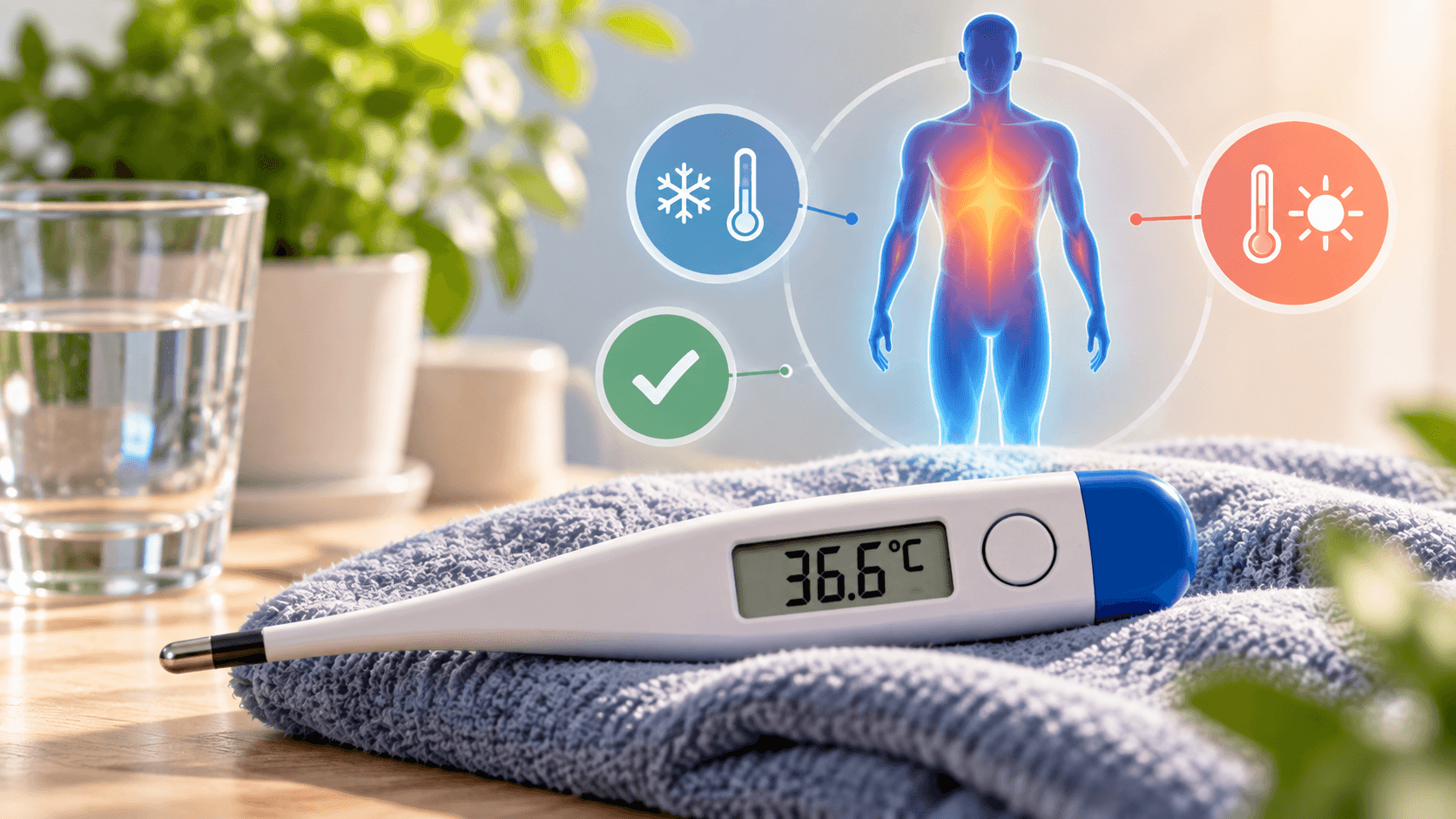
What is the body temperature?
Your body's temperature is caused by the work it does to keep you alive, with your heart, brain, liver, and muscles producing the majority of the heat. Most of the time, your temperature will remain consistent; however, body temperature might fluctuate depending on your activity level and time of day, among other factors. When your body produces a lot more or less heat than usual, it's trying to notify you something's wrong.
Different Ways to Measure Body Temperature
There are various methods for measuring body temperature. The ideal method may vary depending on the circumstances and the person's body temperature being monitored.
Rectal temperature. This is the most precise way for taking a baby's or infant's temperature, particularly those under the age of three months. Make sure you use a digital rectal thermometer with a short probe.
Oral temperature. You can also use a thermometer in your mouth to take your temperature. Make careful to close your lips securely and breathe through your nose.
Tympanic temperature. This is when you insert a digital thermometer into your ear. These thermometers are quick and simple to use, although they may be less accurate than other methods.
Temperature of the forehead. You can put an electronic digital thermometer on your forehead to take your temperature. You can also use a noncontact infrared thermometer. Avoid using plastic strip thermometers that change color when pressed against your skin, as they are the least accurate technique of detecting temperature.
Armpit temperature. If you don't want to put a thermometer in your mouth, rectum, ear, or forehead, you can take the temperature in your armpit with any digital thermometer. This is also known as an axillary temperature.
What Are the Normal Body Temperature Ranges?
Not everyone has the same "normal" body temperature. Yours could be drastically different from someone else's. Your temperature changes during the day and will continue to do so throughout your life.
A German doctor in the nineteenth century established the benchmark at 98.6 F, although more recent research suggests that the baseline for most people may be lowering.
Normal body temperature range dependent on age.
A typical adult's body temperature ranges from 97 to 99 degrees Fahrenheit. Adults over the age of 60 tend to have lower body temperatures than younger adults. Babies and children have a larger temperature range: 95.9 F to 99.5 F (measured with an oral thermometer) or 97.9 F to 100.4 F (measured with a rectal thermometer).
What is the average forehead temperature for adults?
Your temperature reading may also vary depending on where on your body you take it. Underarm readings can be one degree lower than those obtained from the mouth. Rectal temperatures are typically up to a degree higher than oral values. If you use a digital or noncontact infrared thermometer on your forehead, the results may be slightly lower than those obtained through your mouth. However, for people, a normal temperature measured with a noncontact infrared thermometer will be between 97 and 99 degrees Fahrenheit.
Fever is defined as a body temperature that is greater than normal. Hypothermia occurs when the body's temperature drops too low. Both need to be monitored.
Fever (increased body temperature)
How high is too high in terms of your body temperature? Any temperature above 100.4 F is termed a fever. A fever may make you feel miserable, but it is not necessarily dangerous for you. When bacteria infiltrate, your body responds appropriately. It is fending them off.
Fever in adults.
Fever severity varies across adults. This includes:
Low-grade fevers: 99.1-100.4 F
Moderate fevers range from 100.6 to 102.2 F.
High-grade fevers (102.4 to 105.8 F)
If you are an adult with a fever of more than 104 degrees Fahrenheit, you should contact your doctor.
If you have a fever, you may experience other symptoms besides feeling warm. These may include:
Headache
Sweats
Chills
aching muscles or chest ache
Hot, dry skin.
Nausea or vomiting.
A heated face.
I am not interested in eating.
Many fevers will subside within a few days. However, you should consult a doctor if you experience any of the following symptoms alongside a fever:
Seizure
Confusion, feeling sleepy, or dull
Loss of consciousness.
Stiff neck.
Having trouble breathing
Painful or burning urinating
Severe ache throughout your body.
A purple-spotted rash.
Fever among children
Children's fevers can be difficult to detect, and they may be unable to express their discomfort. Signs of a fever in children may include:
Looking crimson or flushed.
Feeling heated.
Feeling sweaty.
Losing their appetite.
Acting tired or cranky
Complaining about headaches or body aches
A child's fever, like an adult's, can often be treated at home. However, you should call your child's pediatrician
Under three months old with a rectal temperature of 100.4 F or greater.
Between 3 months and 3 years old, with a rectal fever of more than 102 F.
Older than three years and has an oral temperature exceeding 103 degrees Fahrenheit
Between 3 and 6 months old and, combined with a fever, is fussier or more uncomfortable than normal, or does not appear alert.
Sick enough to cause alarm, regardless of what the thermometer indicates, or has had a fever for more than three days.
How can you lower a fever?
If you have had a high temperature for three days or more, contact your doctor for assistance.
However, if you have a moderate or low temperature and are uncomfortable, you might try several home remedies to reduce your fever.
Take an anti-fever medication such as acetaminophen or ibuprofen. Do not give aspirin to a feverish child or teenager since it has been associated to Reye's syndrome, an uncommon enlargement of the liver and brain.
Have a lukewarm bath or shower.
Apply a moist washcloth to the forehead and wrists.
Consume fluids.
Get plenty of rest.
Hypothermia (Lower Body Temperature)
If your body loses too much heat, the consequences can be severe, even fatal. Hypothermia occurs when your body temperature drops below 95 degrees Fahrenheit and your body loses heat quicker than it produces heat. You may believe that hypothermia occurs only after prolonged exposure to extremely cold temperatures. But it also happens indoors. A body temperature that is lower than normal may indicate that you are ill.
Hypothermia in adults.
Hypothermia is a major problem among the elderly. If there is excessive air conditioning or little heat, older folks may find it difficult to maintain a regular body temperature.
Other factors also increase your risk of developing hypothermia. They include:
Alcohol or drug use
Hypothyroidism (underactive thyroid)
Anorexia
Stroke
Sepsis is an overpowering infection.
Severe burns
Parkinson's disease.
Nerve injury.
Malnutrition
medications such antidepressants, antipsychotics, or sedatives
Anesthesia
Exposure to cold weather or water
The symptoms of hypothermia are comparable indoors and outside. Hypothermia produces mental confusion, therefore someone who is hypothermic may be unaware that they require assistance. Symptoms of hypothermia include
Shivering (may stop at extremely low body temperature)
Exhaustion or being tired
Confusion
Slurred speech.
Clumsiness or a loss of coordination
Pale, chilly skin
Slowed respiration or heart rate
Memory loss.
Hypothermia in children.
Hypothermia is also a serious risk for children. Babies may have difficulty controlling their body temperature. They can easily lose heat. It's crucial to keep them warm. A temperature below 97 degrees Fahrenheit is considered too low for newborns.
Symptoms of infant hypothermia include:
Low energy.
Cold skin seems flushed or bright red.
How To Treat Hypothermia at Home
Hypothermia is a life-threatening condition. If you feel you or someone you're with has hypothermia, call 911 immediately or go to the emergency department.
While you wait for emergency services to arrive, there are several things you can do at home to help someone warm up. This includes:
If you are outside, gently bring the victim to a warm room.
Remove the person's damp clothing and replace it with dry clothes.
If you have an electric blanket, warm their chest, neck, and crotch.
You can also utilize skin-to-skin contact to warm someone while they are wrapped in loose blankets or sheets.
If the person is alert, offer them a warm beverage to drink. Do not offer them alcohol or caffeine.
If the person is unconscious and not breathing, start CPR until emergency services arrive. Keep trying to warm them up while performing CPR.
Is 96 F a normal temperature for a child?
If you use an oral thermometer, the usual range for children's temperatures is 95.9 F to 99.5 F. So 96 degrees Fahrenheit would be considered normal for a child. However, for an infant, 96 degrees Fahrenheit is too low. If your baby is under one year old and has a temperature below 97 degrees Fahrenheit, contact your pediatrician.
Things That Affect Normal Body Temperature
A variety of factors might cause your body temperature to rise or fall above 98.6 degrees Fahrenheit. This includes:
How active are you?
What time of day is it
The weather
Your age.
Your sex
If you have any health conditions
What you've consumed or had to drink
Where are you at in your menstrual cycle
What body part or method are you using to take the temperature
Conclusion
Doctors used to believe that the "normal" body temperature was 98.6 degrees Fahrenheit, but we now know that normal body temperatures vary between adults and children. Your body temperature can be influenced by a variety of factors, including activity level, time of day, weather, and age. A typical temperature for adults is 97 F to 99 F, while for youngsters it is 95.9 F to 99.5 F. Higher temperatures than this are fevers, which are induced by the body's defense against an infection. Lower temperatures can cause hypothermia, which is a serious emergency condition.