Overview
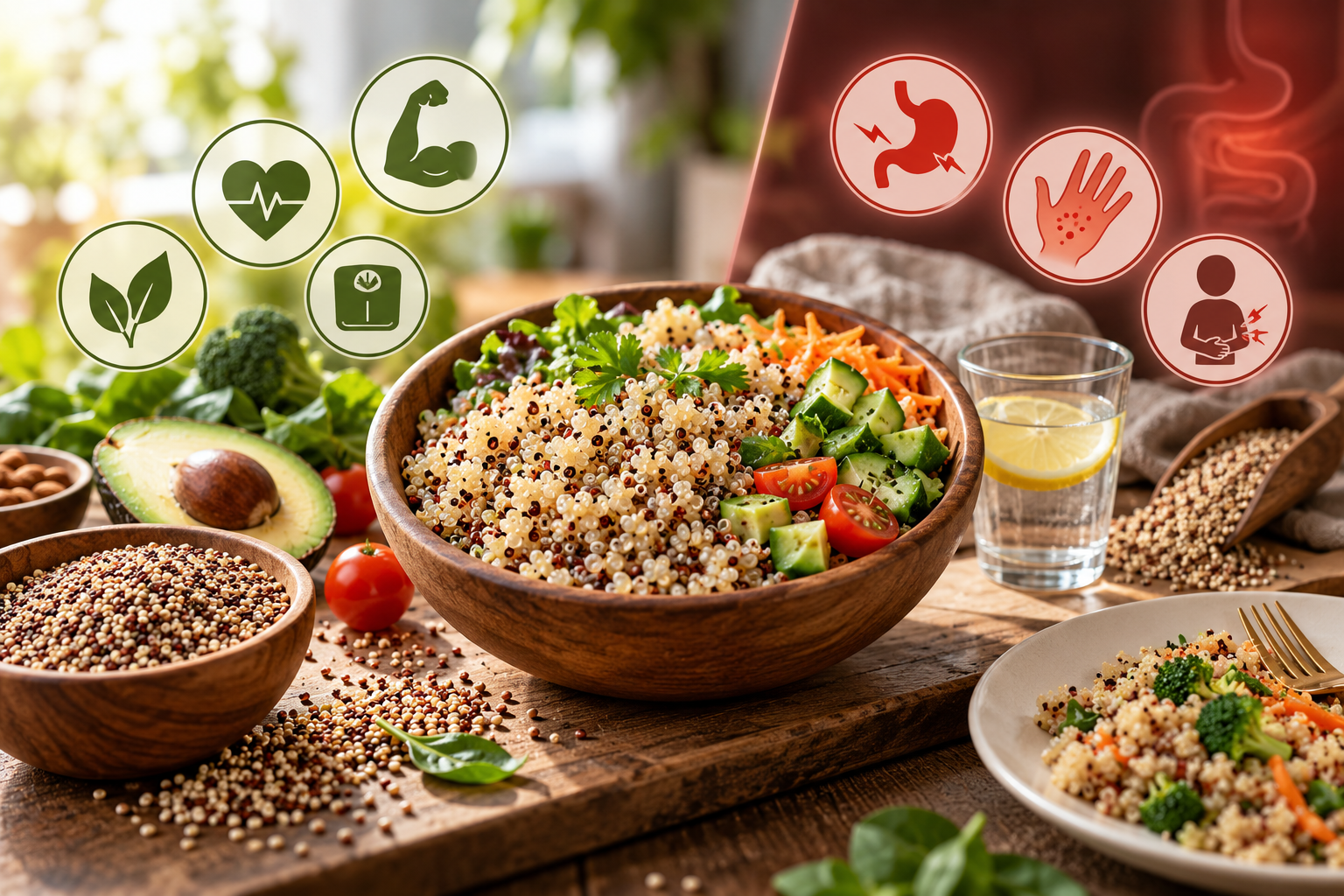
Quinoa is a plant. Quinoa seeds are consumed like grains, such as wheat. However, this is not a real grain. Quinoa contains more protein than real grains. It does not include gluten.
Quinoa is taken orally to treat high blood fat levels known as triglycerides and cholesterol, discomfort, urinary tract infections, and weight reduction.
Quinoa is utilized in food products such as flour, soups, and beer. Quinoa is also used in recipes to replace grains like wheat for persons who must avoid gluten, such as those with celiac disease.
Eating quinoa may make people feel fuller than wheat or rice. Eating quinoa may also lower post-meal levels of blood fats known as triglycerides compared to eating bread.
How does it work?
Eating quinoa may make people feel fuller than wheat or rice. Eating quinoa may also lower post-meal levels of blood fats known as triglycerides compared to eating bread.
Uses and Effectiveness
Insufficient Evidence for
Obesity. Early research indicates that consuming quinoa did not help overweight men lower blood sugar, blood lipids, or blood pressure.
Health concerns following menopause. According to preliminary study, consuming quinoa did not assist postmenopausal women reduce blood sugar or blood fat levels.
Celiac Disease.
High triglyceride levels in the blood.
Insect repellent.
Pain.
A urinary tract infection.
Weight loss.
Other conditions.
Side Effects
Quinoa is most likely SAFE to consume as a food. There is insufficient reliable evidence available to determine whether quinoa is safe to use in bigger amounts as a medicine or what the potential adverse effects are. Some people are allergic to quinoa.
Special Precautions and Warnings
Quinoa is most likely SAFE to consume as a food. There is insufficient reliable evidence available to determine whether quinoa is safe to use in bigger amounts as a medicine or what the potential adverse effects are. Some people are allergic to quinoa.
Pregnancy and breast-feeding: There isn't enough credible information to determine whether quinoa is safe to consume while pregnant or breastfeeding. Stay on the safe side and avoid using levels greater than those found in food.
Quinoa may trigger an allergic reaction in persons who are sensitive to grains such as buckwheat, wheat, and rice. If you are allergic to grains, consult with your doctor before using quinoa.
Dosing
The proper quinoa dose is determined by a variety of factors, including the user's age, health, and other conditions. At this moment, there is insufficient scientific data to identify an acceptable quinoa dose range. Keep in mind that natural products are not always safe, and dosages are vital. Before using, follow the recommendations on the product label and speak with your pharmacist, physician, or other healthcare expert.