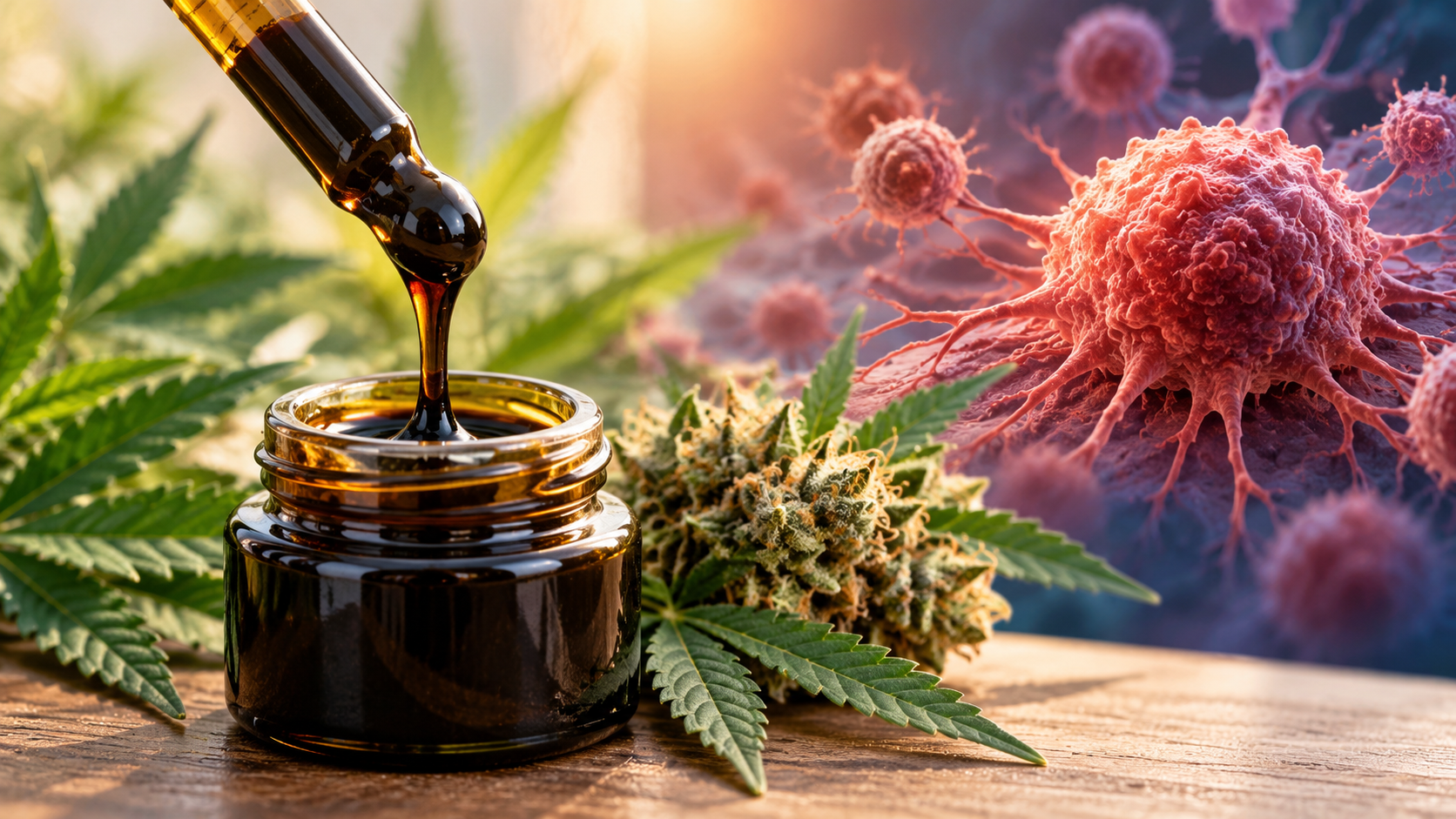
Rick Simpson oil (RSO) is derived from the entire cannabis (marijuana) plant and has garnered interest online from those who say it helps cancer. However, there is no conclusive evidence that cannabis or any of its chemical constituents may heal cancer.
According to online accounts, Simpson is a Canadian engineer and cannabis activist based in Europe. After his doctor removed basal cell skin cancer in 2003, Simpson used RSO to his bandages. According to accounts, he claimed that the oil treated his cancer within a few days.
Although there is no evidence that cannabis helps cancer, some preliminary study suggests it may alleviate cancer symptoms and treatment adverse effects. Cannabis includes many cannabinoids, substances that operate on your endocannabinoid system (ECS), which controls:
Appetite & Memory
Overall Immune Response
"The whole plant contains somewhere on the order of 160 cannabinoids, hundreds of terpenes, and other compounds of medical interest," says Jeffrey Hergenrather, MD, the Society of Cannabis Clinicians' former president and co-founder. "Each [compound has] its own potential therapeutic value."
What Is Rick Simpson's Oil?
Originally, complete cannabis plants were soaked in naphtha (a sort of paint thinner), and the solvent was boiled off, leaving behind a viscous oil known as RSO. This resulted in a concentrated extract with extremely high quantities of tetrahydrocannabinol (THC) and other cannabinoids.
For thousands of years, many strains of cannabis have been utilized for both recreational and medicinal purposes. Today, RSO is a highly concentrated, full-extract cannabis oil (FECO) derived from ethanol, a food-grade alcohol.
"Ethanol is far superior, as a trace of alcohol is not harmful," explains Hergenrather. "Other 'dirty solvents' such as naphtha are still poisonous." If you want a safer alternative to naphtha, ask for a product made from food-grade ethanol.
What exactly does RSO contain?
It depends on the type of cannabis plant utilized, but the oil is primarily composed of plant chemicals known as cannabinoids, which include THC and CBD. These compounds may include:
Tetrahydrocannabinol (THC) is the major psychoactive ingredient that operates on your brain and emotions to give you the "high" experience.
Cannabidiol (CBD) operates as "a negative allosteric modulator," according to Hergenrather. This suggests that CBD may alter how THC operates on the brain to produce intoxication effects.
Other active substances, such as flavonoids, may provide benefits.
Is RSO a brand?
Rick Simpson oil is neither a brand nor a company-made product. It's the street name for cannabis oil prepared with solvents to extract chemicals from the cannabis plant.
"RSO is a name used to describe a process that is not unique to Rick Simpson's concentrate," Hergenrather notes. There are safer techniques to make RSO, which include:
Food-grade ethanol.
CO2 extraction. "CO2-extracted cannabis oils are a clear to golden clear oil of high quality and consistency," Hergenrather states.
Simpson does not sell the oil through his website, but he does explain how to manufacture it. Professionals can advise you on the right types and uses of marijuana in states where it has been legalized, whether for personal or medical purposes.
Are there numerous varieties of cannabis plants?
Cannabis plants are classified as either indica or sativa. "Biochemically, there is not much difference between one and the other," explains Hergenrather. However, some people claim to see a distinction between the two.
"For thousands of patients, people will tell me that they use them interchangeably with no significant difference," Hergenrather explains. "Others state emphatically that they can only use indica, and another person will say that they can only use sativa."
According to Hergenrather, without more controlled clinical trial testing, professionals cannot tell if one performs better than another to help relieve symptoms.
Can RSO Treat Cancer?
Cannabis may help alleviate some cancer treatment symptoms. However, there is no proof that it can cure cancer and cannot be used as a replacement for current treatment.Mark Chandy, MD, PhD, a cardiologist-scientist and the Barnett-Ivey heart and stroke chair at Western University's Schulich School of Medicine & Dentistry in London, Ontario, Canada, advises patients not to use RSO instead of evidence-based cancer therapy.
What does research show regarding cannabis and cancer?
According to several studies, taking THC for cancer treatment side effects improved appetite and taste. However, even when there was more CBD than THC, weight gain and appetite persisted.
In fact, Hergenrather claims that relatively modest quantities of RSO may help alleviate chemotherapy symptoms such as:
Anxiety
Nausea
Pain and vomiting
THC in cannabis was more effective than a placebo in relieving nausea and vomiting associated with chemotherapy treatments. However, some reported feeling more dizzy and sleepy. As a result, concerns about how to take it with fewer adverse effects persist.
How is RSO usually administered?
Simpson advises clients to take 60 grams of THC over 90 days. Experts recommend starting with a significantly lower amount of 2.5-5 milligrams (mg) of THC if you've never consumed cannabis.
RSO is typically marketed in syringes due to its thick, sticky consistency. Because this oil is extremely concentrated, it is critical to measure the dosage precisely.
"RSO is one of the most cost-effective forms of cannabinoids in the marketplace," Hergenrather explains.
Start slowly.
Always with your doctor or oncologist before using cannabis or RSO. "The rule of thumb is to start low and go slow(ly)," adds Hergenrather. Working with your doctor, "increase the daily dose as tolerated to achieve a target dose."
Higher THC doses
According to Hergenrather, taking "only a'speck,' about 1/50th of a gram" of RSO may be sufficient to alleviate cancer symptoms. That's approximately 20 milligrams of RSO.
Always consult your doctor before using cannabis (RSO). They can help you review:
Possible pharmaceutical interactions.
Any adverse effects?
The safest and most effective dosage
Also, bring an up-to-date list of your medications.
Other Medical Applications of Cannabis
Many states in the United States and the District of Columbia have legalized marijuana for both medical and recreational use. Some research suggests that it can assist with:
HIV/AIDS can cause appetite loss and weight loss.
Symptoms of chemotherapy include nausea and vomiting
Chronic pain.
In reality, the FDA has approved Epidiolex (oral CBD) to treat seizures caused by some kinds of epilepsy that are resistant to other treatments. There are two types of man-made THC to relieve nausea and vomiting from chemotherapy:
Dronabinol (Marinol or Syndros)
Nabilone (cesamet)
Some research also show that cannabis may help:
Multiple Sclerosis Symptoms
Anxiety
Insomnia and nightmares associated with posttraumatic stress disorder.
Tourette syndrome is a movement disorder.
Cannabis and RSO are both utilized in palliative care.
If you have cancer, heart disease, or other medical issues, tell your doctor you're taking cannabis. This allows them to create the most effective health plan for you."Natural does not always mean safe," explains Chandy. "Cannabis may help alleviate symptoms in select patients, but it is not a proven cancer treatment."
Emerging Risks with High THC
Cannabis products, including RSO, now contain significantly higher THC levels than in the past. Higher THC levels in RSO can make it more difficult to dose safely. Similar to marijuana, the THC in RSO may cause:
irregular heart rate patterns.
Blood pressure can be high or low.
Heart issues.
Intoxication
Dizziness
Impaired decision-making
Anxiety, Paranoia, or Psychosis
Balance issues, falls.
What about the long-term use of cannabis?
There are new research that link cannabis usage to an increased risk of cancer. "In the long term, THC is now linked to adverse cardiovascular events such as heart attack, stroke, and arrhythmias," Chandy explains.
Long-term cannabis use may increase the chances of:
Vehicle accidents
Drug interaction and addiction
Cannabis Hyperemesis Syndrome (vomiting)
Chronic Obstructive Pulmonary Disorder (COPD)
Cancers of the head and neck, lungs, and testicles
Problems with your unborn baby's nervous system development.
Keep in mind that RSO is not FDA-regulated, therefore the formula is unpredictable. RSO is also not permitted in all states, so you must check your local laws to determine whether cannabis is legal. To learn more about your state's cannabis regulations, visit the National Conference of State Legislatures (NCSL) website.
Conclusion
Rick Simpson oil (RSO) is a viscous oil with high quantities of cannabinoids like cannabidiol (CBD), tetrahydrocannabinol (THC), and other active chemicals. There is no evidence that RSO or cannabis cure cancer, however they may alleviate some cancer-related symptoms. Consult your doctor before using cannabis. They can go over any drug interactions and help you determine what's best for your health.