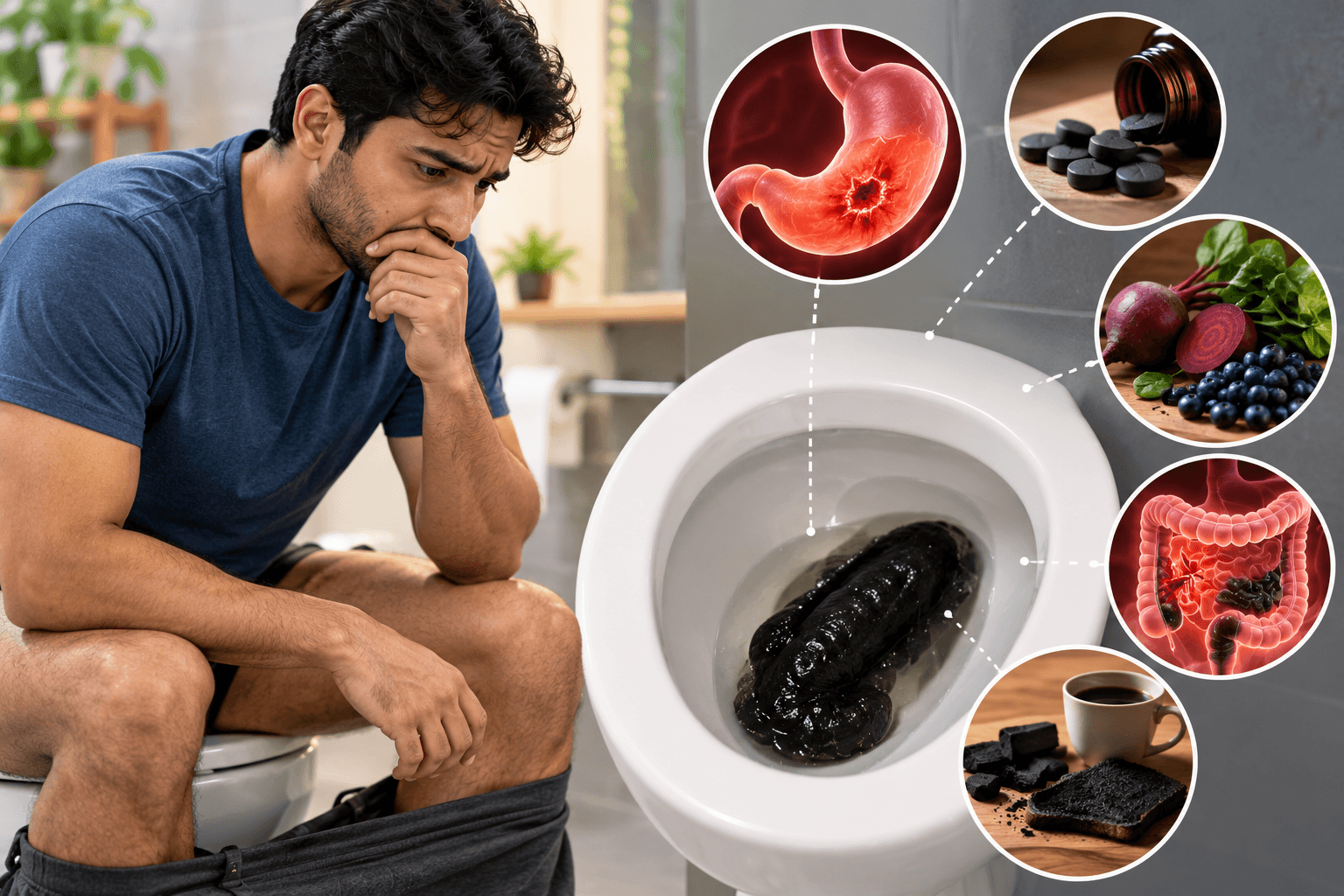
What is Black Poop?
Sometimes people's feces is so dark that it seems black. It could also have a sticky consistency, similar to tar. If your poop is black, it could be due to a change in your diet, a new medication you're taking, or a medical issue you don't want to overlook.
Poop can take on a variety of colors, including brown, yellowish, and green. It is frequently caused by the things you've eaten, the prescriptions you've taken, and the amount of bile (a greenish digestive fluid) present. However, excrement that appears black or bright red may indicate hemorrhage. So, even if you think you know why it's happening, always contact your doctor if you have black poop.
Black Poop Causes
Black stool often indicates that there is bleeding in your digestive tract. Bleeding may originate from:
An injury or tear in the lining of the digestive tract
A tear in your esophagus (the tube that connects your mouth and stomach) caused by violent vomiting.
A bleeding ulcer (peptic ulcer illness).
Severe inflammation in the stomach lining (gastritis) or esophagus (esophagitis)
Swollen, twisted veins (varices) in the stomach or esophagus
Erosion of the stomach lining (acute hemorrhagic erosive gastropathy) can be caused by heavy drinking, large dosages of nonsteroidal anti-inflammatory medicines (NSAIDs) such as aspirin or ibuprofen, or cancer treatments like chemotherapy.
Cancer in the esophagus, pancreas, or stomach
A viral hemorrhagic fever, such as Ebola
However, it can also be caused by less dangerous substances. They include:
Medicines containing bismuth subsalicylate, a chemical used to treat stomach issues such as diarrhea.
Activated charcoal, a black, powdery substance that is used to treat some types of poisoning and is also sold as a supplement.
Dark-colored foods, such as blueberries and black licorice.
Iron Supplements
Iron Supplements with Black Stools
Black or very dark green diarrhea may be a side effect of iron supplements used to treat anemia, a condition in which there are insufficient red blood cells to transport oxygen throughout the body. This side effect is not harmful, however contact your doctor if:
Your poop also appears tarry.
You notice red streaks in your excrement.
Iron supplement side effects
Other possible negative effects of iron supplementation include:
Constipation
Diarrhea
Stained teeth (with liquid forms of iron).
Nausea
Heartburn
To limit the risk of adverse effects, always follow your doctor's instructions when taking iron supplements. Tell your doctor if any of the adverse effects worry you. They may recommend a different type of iron supplement that works better for you.
Foods That Cause Black Poop.
Some dark or intensely colored meals and beverages might briefly turn your excrement black. This includes:
Black licorice
Chocolate sandwich cookies.
Blood sausage
Blueberries
Grape Juice
Beets
Foods or beverages with artificial coloring
Dark, leafy vegetables
Dark beer.
The dark tint should fade after you stop ingesting the meal or beverage that generated it.
Bismuth Subsalicylate
Bismuth subsalicylate is an ingredient in medications used to treat diarrhea, heartburn, and upset stomach. It works by lowering inflammation in your intestines and the flow of fluid into them.
Pepto-Bismol is one of the most well-known drugs that contains bismuth subsalicylate. Others include:
Bismatrol
Diotame, Kaopectate, Kapectolin, and Kola-Pectin
Why does it produce black poop? Bismuth subsalicylate mixes with sulfur in your saliva and digestive tract, forming bismuth sulfide, a dark material. It exits the body as black excrement.
Your poop should return to normal once you stop taking drugs containing this chemical, but it may take a few days.
Internal Bleeding
Black, tarry excrement with an extremely foul odor is generally indicative of bleeding in the esophagus, stomach, or upper part of the small intestine. When blood is digested in the gastrointestinal tract, it turns black and tarry. If you have bleeding in the lower digestive tract, your stool may seem crimson.
Several medical disorders can induce the type of bleeding that results in black stool, ranging from an esophageal rupture to stomach cancer. Internal bleeding is a dangerous disorder that requires medical attention.
What is Melena?
Doctors use the term melena to describe dark stool caused by bleeding in your digestive system. Your doctor can check to see if your poop contains blood. If they detect it, doctors will need to conduct additional testing, such as blood and imaging tests, to determine what is causing the bleeding.
Melena Treatment
Melena is a sign of bleeding in the digestive tract rather than an illness in itself. The type of treatment required is determined by the cause and severity of the condition.
Your doctor may take the following steps:
Stop the bleeding. They may employ stitches, medicines, a band or clip, or electrocautery (heat generated by an electric current) to do this.
If necessary, treat your blood loss with intravenous fluids or a blood transfusion.
Treat the problem that caused the bleeding. Acid-blocking medicines may be used to treat inflammation, erosion, or ulcers. Other conditions may necessitate more rigorous treatment.
Bleeding ulcer
Peptic ulcers are one of the most common causes of melena. An ulcer is an open sore on the inside of the stomach or small intestine. These lesions can bleed, resulting in colored poop.
Peptic ulcers occur when digestive acids cause damage to the lining of your stomach or intestine. This can be caused by several factors, including:
Inflammation caused by the bacteria H. pylori.
Overuse or abuse of NSAIDs such as aspirin, ibuprofen, and naproxen
Ulcer symptoms
Other symptoms that you have an ulcer are:
Heartburn or dull stomach pain?
Bloating or the sensation of fullness
Burping
Nausea and/or vomiting (which may include blood or resemble coffee grounds)
Some ulcer medications reduce stomach acid levels. Others cover your stomach, protecting it from the damage that acids might inflict. Your doctor may also prescribe medications to eliminate H. pylori.
See blood in your poop or vomit.
Have difficulty breathing.
Feels like you're about to pass out.
I lost weight without trying.
Lose your appetite.
Esophageal and stomach cancers
Black, tarry stool can indicate esophageal or stomach cancer.
Why does cancer produce black poop?
Tumors frequently bleed, and internal bleeding produces black stool. Tumors at the upper region of your digestive tract are more likely to cause black stool than those farther down, because the blood is exposed to digestive juices before leaving your body.
Esophageal cancer symptoms
Some common symptoms of esophageal cancer include:
Problems swallowing
Losing weight without trying
Pain in your chest.
Indigestion or heartburn.
Coughing
Gastric Cancer Symptoms
Gastric (stomach) cancer patients may experience symptoms such as:
Feeling exhausted.
Feeling bloated after eating.
Serious heartburn or indigestion.
Nausea or vomiting.
Pain in the stomach.
Lose weight without trying
The treatment for these malignancies is determined on the disease's stage and extent of spread. Surgical, chemotherapy, and radiation treatments are all options.
Mallory-Weiss Tears
Intense coughing or vomiting might rip your esophagus and cause bleeding. This ailment is known as a Mallory-Weiss tear.
Mallory-Weiss Tear Symptoms
Aside from black poop, you could have the following symptoms:
Bright red vomit, or black vomit that resembles coffee grounds.
Weakness
Dizziness or fainting.
Having trouble breathing
Pale skin.
Diarrhea
Belly or chest pain
Most tears heal naturally. If yours does not, your doctor might apply heat or administer medication to halt the bleeding.
Contact your doctor if:
Notice a dark tint in your vomit or stool.
Feel weak or dizzy.
Are you short of breath?
Are you experiencing pain in your chest or belly?
Esophageal Varices.
Varices are bulging veins in the esophagus. They are more prevalent in persons with liver problems. These irregular veins can sometimes leak blood or rupture, causing bleeding and turning your stool dark.
If your black poop is caused by varices, you may also have symptoms such as:
Vomiting Blood
Dizziness
Fainting
Bleeding in the esophagus is an emergency that should be treated in a hospital. The therapy usually consists of administering drugs via an IV to reduce vein pressure or performing an endoscopy, which includes tying up the veins to prevent bleeding.
Contact your doctor if:
Have bloody vomit or dark, tarry poop
Get extremely dizzy or pass out.
Black Flecks in Poop.
Sometimes your excrement includes black flecks or dots rather than being a homogeneous dark color. These black patches in your stool could represent undigested food, such as blueberry or black bean skins.
However, these dark blotches might be caused by the same factors that create overall black poop, such as eating dark meals, taking certain drugs, and internal bleeding. Poop that appears dark brown and has a texture similar to coffee grounds may indicate the presence of older blood in your digestive track.
Concluding
You may develop black poop as a result of something as simple as a dietary change or medication you are taking. However, it can also be a sign of a serious medical condition, such as bleeding in your digestive tract. If you have black poop, consult a doctor right away, especially if it is sticky or tarry.