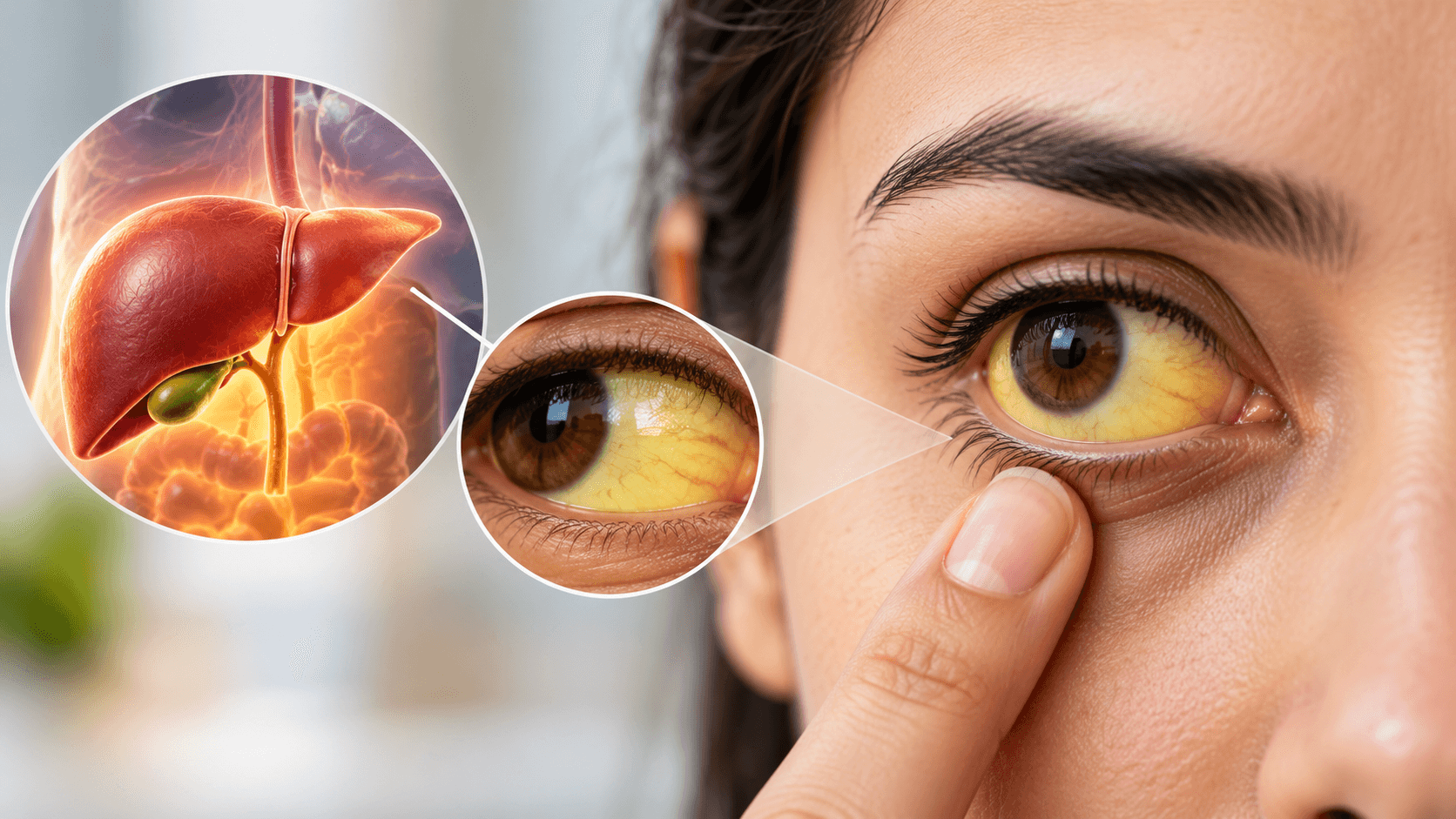
The whites of your eyes may turn yellow if your body contains too much bilirubin, a yellow material formed when red blood cells degrade. Your liver removes bilirubin from your blood and converts it into bile. Bile travels through thin tubes (called bile ducts) to reach your digestive tract and ultimately exits your body as waste.
However, if your blood contains too much bilirubin or your liver is unable to eliminate it quickly enough, it accumulates in your body and can cause your eyes to turn yellow. That is jaundice. Find out why adults get jaundice.
Common Causes of Yellow Eyes
Yellowing of your eyes can occur for a number of causes, including:
Hepatitis
Hepatitis occurs when your liver becomes inflamed. The most common cause is a virus that affects liver cells, such as hepatitis A, B, or C. The infection can be short-lived (acute) or long-term (chronic), meaning it lasts at least six months.
Hepatitis affects the liver, causing it to be less capable of filtering bilirubin. This can cause jaundice. Drugs and autoimmune illnesses (in which your immune system assaults your body) can both induce hepatitis. Learn about the early signs of hepatitis C.
Gallstones
These hard, pebble-like chunks of material develop in your gallbladder, a tiny organ located beneath your liver. Gallstones are the most prevalent cause of clogged bile ducts.
Think of bile ducts as drainpipes. They transport fluid from the liver to the gallbladder, where it is stored, and finally to the small intestine. When gallstones obstruct the bile ducts, bilirubin accumulates in your bloodstream. This causes the whites of your eyes to turn yellow. Understand the symptoms of gallstones.
Some rare liver illnesses can potentially clog bile ducts.
Consuming too much alcohol
Drinking heavily for an extended period of time (often 8 to 10 years) might result in significant liver damage. In certain people, it might cause inflammation, which damages liver cells. Scars can eventually replace good liver tissue, making it more difficult for your liver to function properly. Learn about how excessive drinking might lead to alcoholic hepatitis.
Certain medications
The following medications have been related to jaundice:
Acetaminophen (used in excess)
Penicillin (including amoxicillin/clavulanate)
Birth control pills
Chlorpromazine (used to treat specific mental/mood problems)
Steroids
Liver infection
Hepatitis viruses are the most prevalent causes of liver infection, although it can also be caused by parasites such as liver flukes. They can be contracted by consuming raw or undercooked seafood, as well as contaminated plants. Ascariasis, or roundworms, is a rare infection in the United States, yet they can enter and block your bile ducts. Find out more about roundworm infection symptoms and treatment.
A response to a blood transfusion
If you are given the wrong type of blood, such as type A but receive type B, your immune system may destroy it, releasing bilirubin and causing jaundice. This situation is uncommon due to blood testing, however it is considered an emergency.
Sickle cell anemia.
Sickle cell illness is more common in people of African or Caribbean descent. They cause your body to produce sticky, bent red blood cells, which accumulate in your liver and die before your liver can filter them out. Bilirubin from these cells accumulates in the body, causing jaundice.
Malaria
A mosquito bite or contact with contaminated blood transmits the parasite that causes malaria. Your blood cells may burst or become damaged, and your liver or spleen will filter them out. Anemia and jaundice are caused by a loss of red blood cells.
Cirrhosis
This disease causes scar tissue to replace healthy liver cells. It occurs gradually over a long time. Cirrhosis can result from a variety of liver disorders and situations. The most common factors that increase the likelihood are:
Consuming too much alcohol
Obesity increases your risk of developing additional illnesses that can lead to cirrhosis.
Long-term hepatitis B or C infection.
As scar tissue builds up, your liver's ability to function suffers.
Nonalcoholic Fatty Liver Disease
Nonalcoholic fatty liver disease occurs when excessive fat accumulates in the liver despite the fact that you consume little or no alcohol. A severe version of this illness, metabolic dysfunction-associated steatohepatitis (MASH), causes liver inflammation and scarring (cirrhosis).
Hemolytic Anemia
Anemia is a disorder in which your blood contains insufficient healthy red blood cells. There are various varieties. In hemolytic anemia, the body destroys red blood cells too quickly. When this happens, it produces more bilirubin than your liver can process.
You may be born with this form of anemia. It may also be caused by infections or autoimmune illnesses.
Cancer
Liver cancer. Cancer that begins in the liver or spreads to the liver (metastatic from another organ) is the most prevalent cause of jaundice in cancer patients. It can harm liver cells or bile ducts, affecting how well bilirubin is metabolized.
pancreatic cancer. Tumors in the pancreas can strain on bile channels. If bile cannot drain from your liver into your small intestine, bilirubin accumulates. When pancreatic cancer spreads, it generally targets the liver. This can also result in jaundice.
gallbladder cancer. This rare type of cancer typically does not create symptoms until the tumor swells in size or the cancer spreads. When a tumor is large enough to block bile ducts, it might cause jaundice.
Less Common Causes of Yellow Eyes
Bile duct disorders.
Although gallstones are the most frequent bile duct disorder, jaundice can also be caused by:
Biliary atresia. This is a bile duct blockage that often occurs in infants two to six weeks after birth.
Primary biliary cholangitis. This gradually damages the bile ducts.
Primary sclerosing cholangitis. This results in scarring in the ducts. Get an overview of primary sclerosing cholangitis' causes, symptoms, and treatments.
Ulcerative Colitis
Ulcerative colitis can cause liver damage, resulting in primary sclerosing cholangitis and jaundice.
Sarcoidosis
This inflammatory condition may cause your immune system to assault your body's tissues. If it damages your liver, you may get jaundice. Sarcoidosis can also result in tiny yellow pimples on the eye.
Amyloidosis
This illness involves the accumulation of an uncommon protein called amyloid in your tissues and organs. Jaundice can develop when deposits form in your liver.
Pancreatitis
Jaundice is a typical consequence of pancreatitis, caused by a blockage in the bile ducts. Understand the symptoms of pancreatitis.
Gilbert syndrome
This rare illness affects only roughly 3% to 7% of the population. If you are born with it, your liver does not produce enough of the enzyme required to digest bilirubin. As a result, your blood contains more bilirubin, and your eyes get yellow.
Dubin-Johnson syndrome is an even more unusual condition that affects the liver and can induce jaundice. It is passed down through families.
Yellow eyes in infants.
Many neonates develop jaundice due to a slight accumulation of bilirubin. You might notice:
Yellow eyes and skin, beginning on the face and progressing down the body
Poor feeding
More sleepiness
High bilirubin levels can result in convulsions, hearing loss, and brain damage. If your infant shows indications of jaundice, your doctor should monitor their bilirubin levels.
Your baby's body eliminates excess bilirubin through their stool. Breast milk has a laxative effect, so they poop more frequently. They should nurse at least eight times daily. If you have questions or concerns, contact a lactation consultant.
Special lights can also assist your baby's body eliminate excess bilirubin.
How to get rid of yellow eyes?
Your yellow eyes should clear up when you treat the underlying reason. For example, if a gallstone is blocking your bile duct, you may need to take medication or undergo minor surgery. If you have hepatitis, your doctor may prescribe medications to help you fight the virus. Alternatively, they may advise you to avoid drinking alcohol or taking certain medications.
Outlook for Yellow Eyes
Cancerous tumors that clog your bile ducts, as well as liver cirrhosis, can be life-threatening. However, with proper treatment, most yellow eye disorders do not progress to more serious issues.